Namibia
/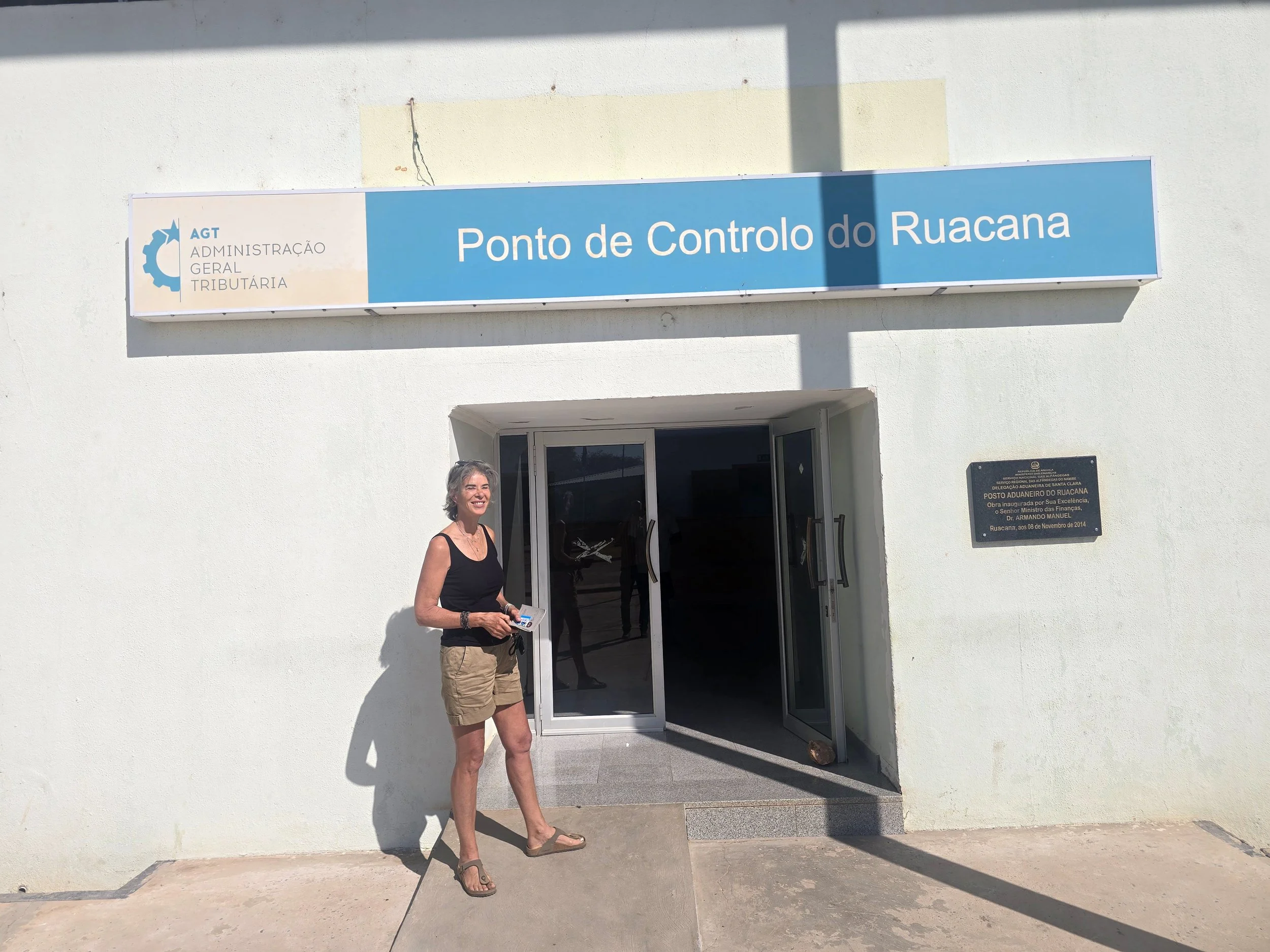
ruacana border post
Our last visit to Namibia had been more than 25 years earlier. On a budget of no more than US$50/day and relying heavily on the generosity of anyone who happened to have a vehicle with a couple of spare seats, we hadn’t exactly conducted an exhaustive exploration. Nevertheless, we came away with fond memories of a vast, dry country containing a surprisingly large amount of wildlife and, rather pleasingly, very few people.
namibia
At first glance, Namibia looks like a country specifically designed to discourage human settlement. Much of it is desert, the rainfall is in short supply and there are large areas where the landscape appears to have been left outside overnight and forgotten. Yet, Europeans spent decades arguing over who should own it.
The Dutch were the first Europeans to arrive, indirectly, from the Cape in the eighteenth century, followed by the British after they took control of the Cape Colony in 1806. The attractions were not immediately obvious, although parts of the country proved suitable for cattle ranching and Walvis Bay offered one of the few good natural harbours on a coastline otherwise occupied by the Namib Desert and the notorious Skeleton Coast, where the combination of fog, surf and treacherous currents have left the coastline littered with shipwrecks.
Germany arrived relatively late, in 1884, presumably having noticed that most of Africa’s more obviously desirable pieces had already been claimed. It declared much of present-day Namibia a protectorate, creating what became known as German South West Africa.
What followed was a particularly brutal period of colonial rule. German forces carried out campaigns against the indigenous people that are now widely recognised as the first genocide of the twentieth century, with tens of thousands of people killed through warfare, starvation, forced displacement and imprisonment.
During the First World War, South African forces invaded and defeated the German colonial forces. Ignoring the rather important detail that it was supposed to be administering Namibia on behalf of the League of Nations, South Africa gradually treated the territory more like an extension of itself, introducing racial segregation, restrictions on movement and unequal access to land and services. These policies developed alongside, and ultimately became part of, the formal apartheid system introduced in South Africa in 1948.
Namibia finally achieved independence in 1990 after a long liberation struggle and years of international pressure. The country’s past, however, is still remarkably visible. German architecture and place names remain, Afrikaans is widely spoken, South African influences are evident in everything from food to road signs, and there is a distinctly Germanic enthusiasm for rules, regulations and a commendable determination to follow them. All of this sits rather awkwardly, but fascinatingly, alongside an African history stretching back thousands of years
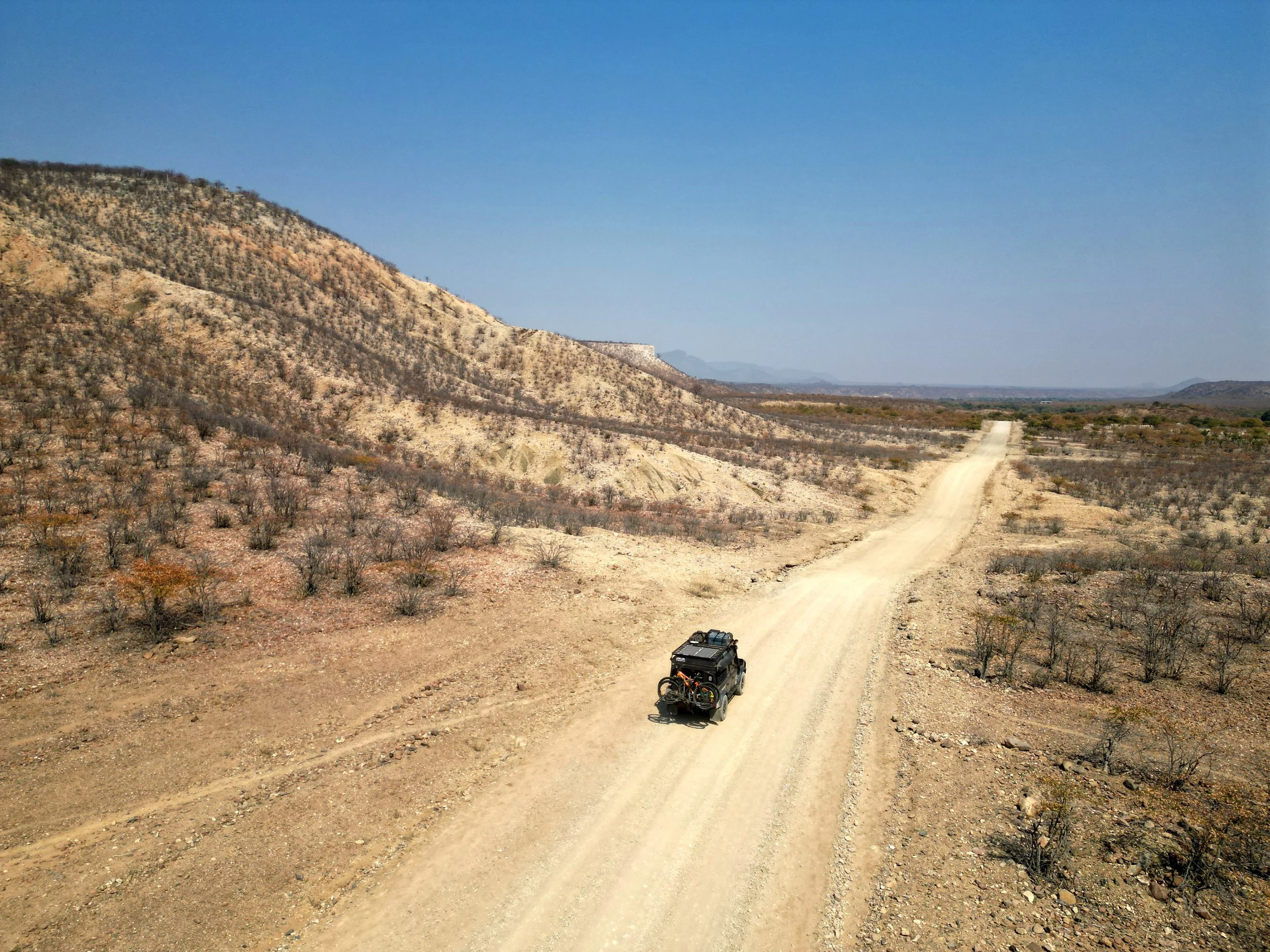
With barely three million people scattered across a country roughly twice the size of France and Germany combined, Namibia has somehow managed to organise itself remarkably well. Its colonial inheritance left functioning infrastructure and institutions, while mineral wealth, tourism and decades of political stability has provided the means to maintain them. Ruacana, a sleepy, and extremely remote land border crossing situated in the middle of nowhere, was still waiting for some of this organisational magic to arrive, although it did at least live up to the Namibian government website’s promise that “they have restrooms and accept cash payments”. Reassuring after a three-day drive through the Iona Desert to get there.
The same website had also advised that visas on arrival were not available. This came as news to the only other person attempting to cross the border: a lone Dutch Defender owner with a long list of mechanical problems, many of which sounded suspiciously familiar. Jumping the short queue, our previously applied for e-visas were soon processed and a small cash fine was extracted for Bob having overstayed his TIP. Unfortunately, the official responsible for stamping our Carnet and collecting the road tax was “in the field”, which in border-crossing terminology apparently meant that no one actually knew where he was, and we were directed to another border crossing, some 40km away, to finish the job.
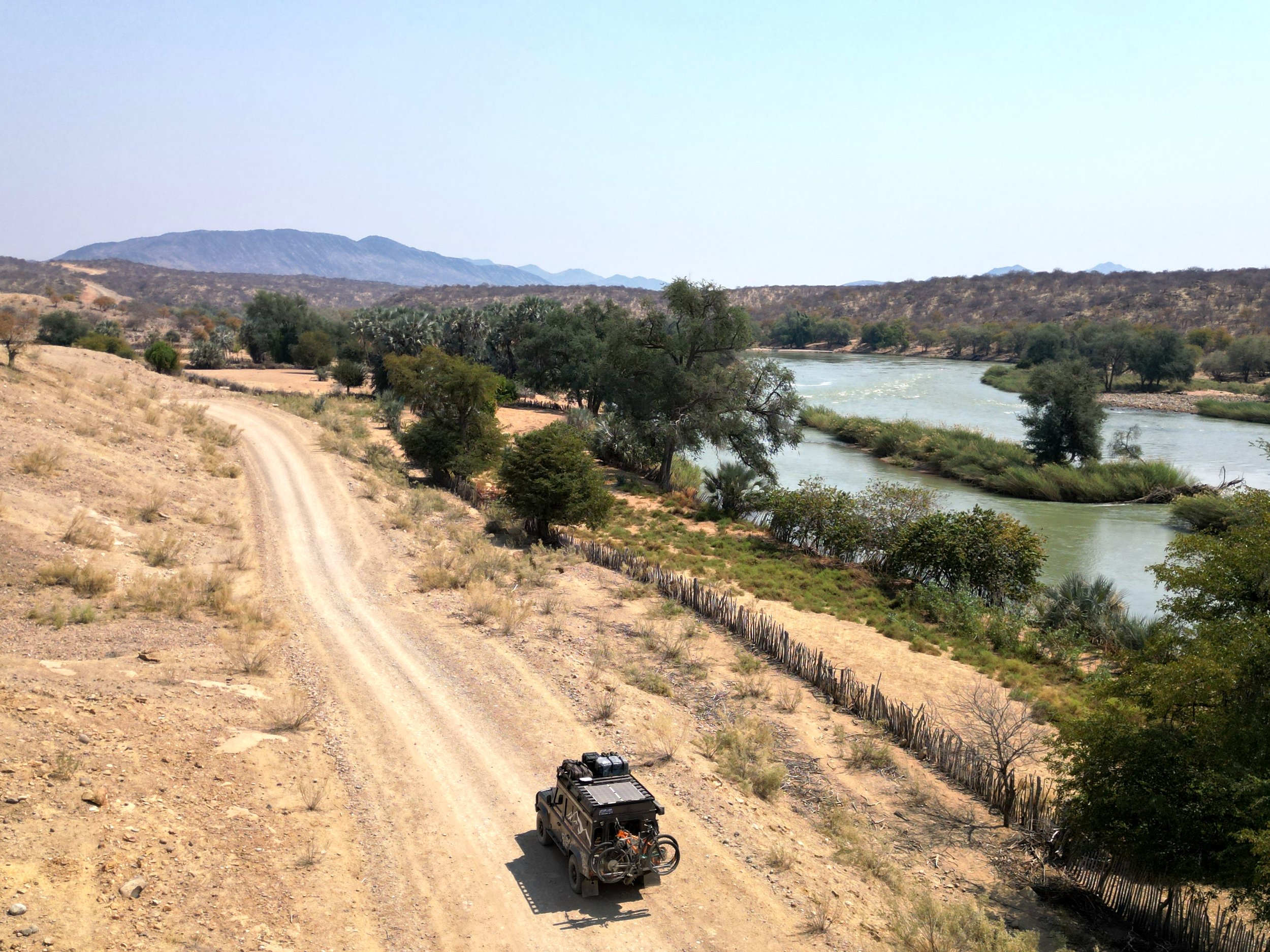
following the kunene river
Three hours later, with the paperwork finally in order, we were able to head west, following the Kunene River to Epupa and its surprisingly substantial falls. Namibia is bounded by two major rivers, the Kunene in the north and the Orange in the south, both forming natural borders. The Kunene rises in the Angolan highlands and, for much of its lower course, forms the boundary between Angola and Namibia. It is an unlikely border: a substantial permanent river in one of the driest corners of Africa. Nature, it seemed, had provided a rather generous gift to the diverse communities living across this otherwise unforgiving landscape.
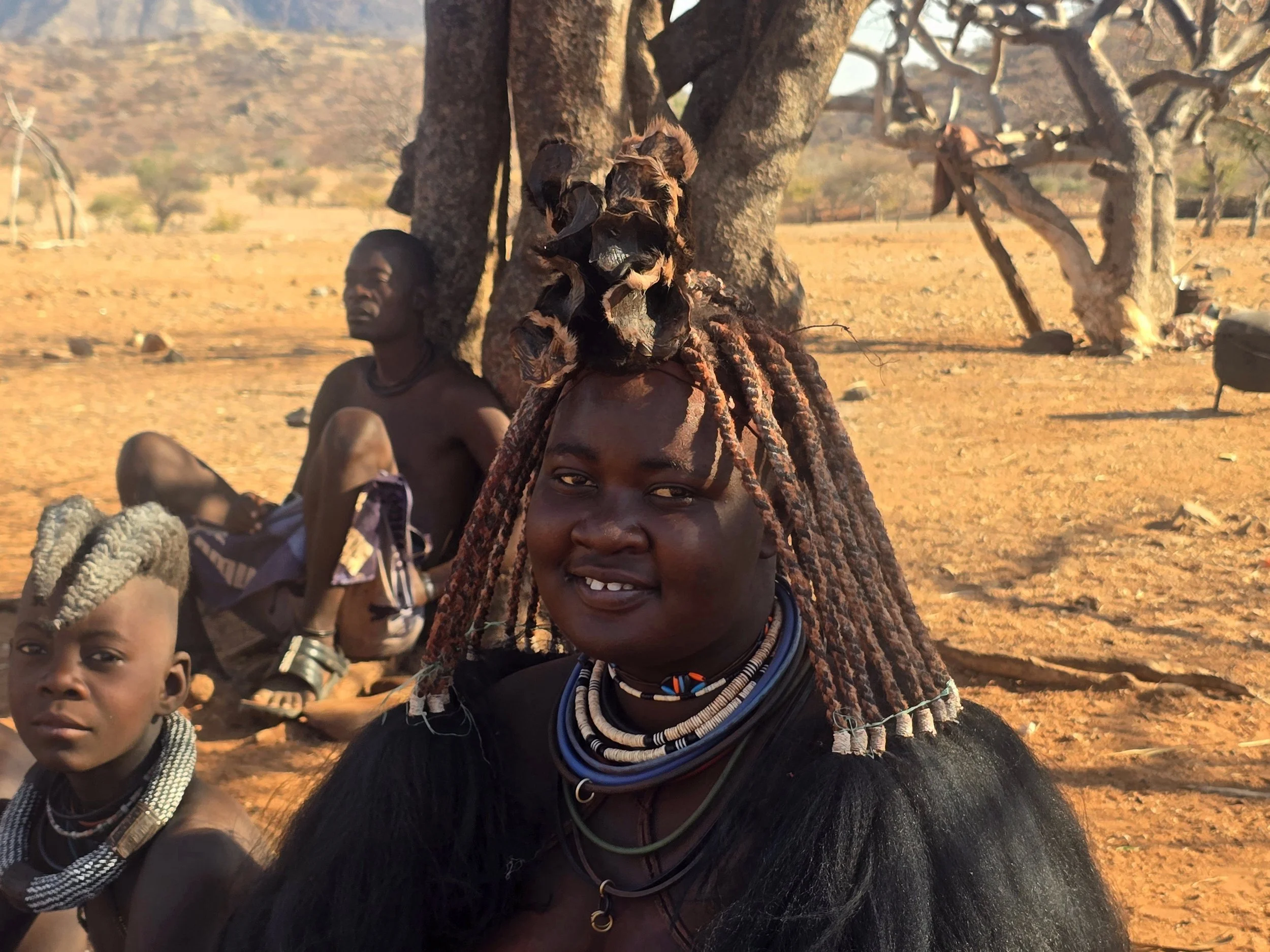
the himba people
We were now in the relatively untouched expanses of Kaokoveld, the least populated area of Namibia and home to the Himba. Traditionally, semi-nomadic pastoralists, they depend on their cattle and goats, moving between grazing and water as conditions dictate. The women are particularly hard to miss. Their skin, leather clothing and elaborately braided hair are coated with otjize, a mixture of red ochre and animal fat. Layers of beads, shells and other adornments complete an appearance that is both striking and highly individual, with elements of dress traditionally indicating age, marital status and social position.
At a small Himba community, a handful of small thatched huts were scattered across the otherwise sparse landscape. At its centre, a sacred fire was kept permanently burning ensuring that a communication channel with the ancestors was always available. Noticing that everyone in the village appeared to be missing two or four lower teeth, we were told that their removal was considered a sign of beauty, usually carried out between the ages of eight and ten. Most children do not attend school; only around 10% are selected to do so with the added incentive that they get to keep their teeth.
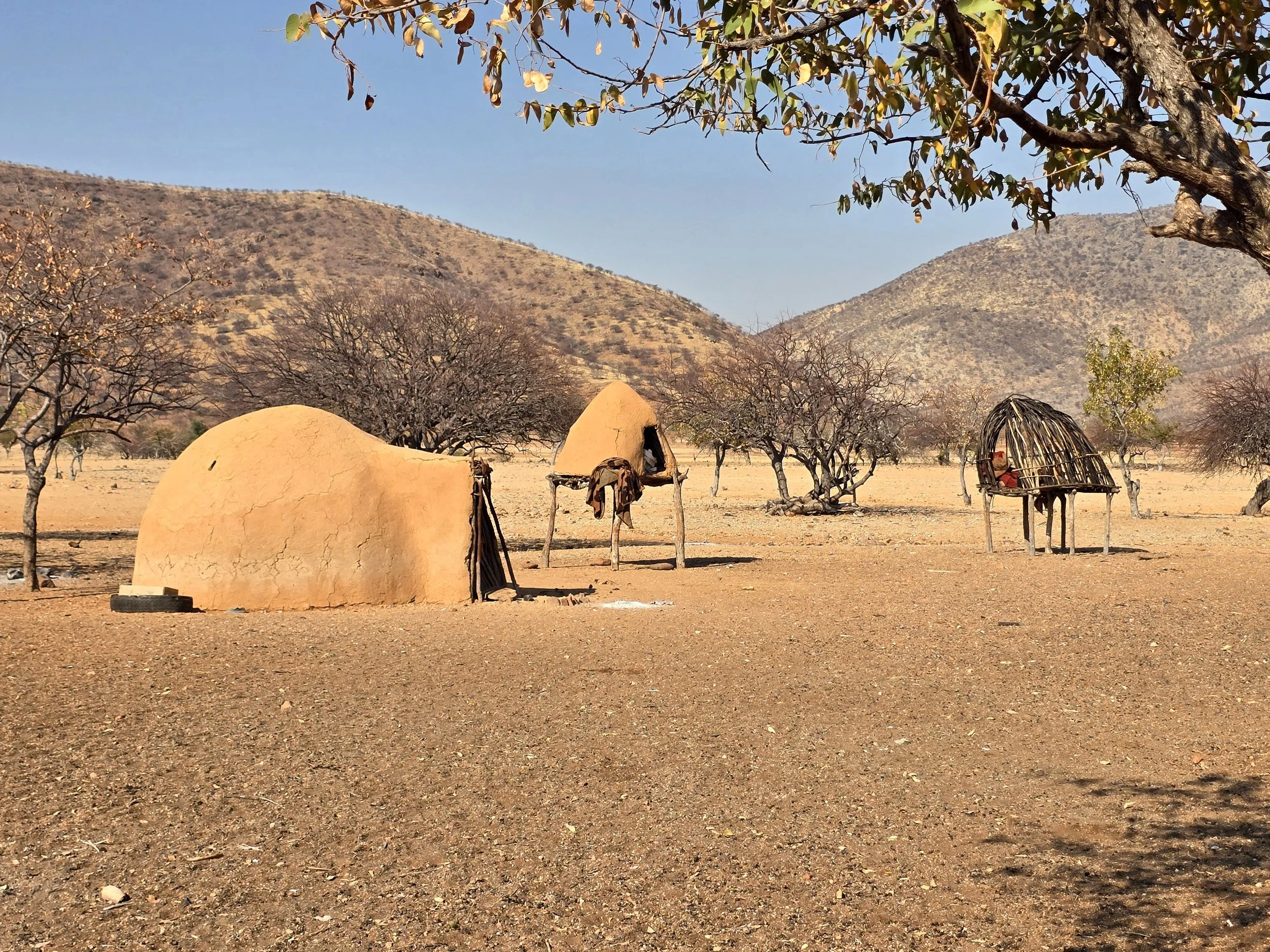
himba mobile village
The whole scene felt as if we had inadvertently walked straight onto the set of Mad Max: Fury Road. The only thing missing was a V9 Interceptor.
The remoteness of a large desert is strangely captivating. Even with the air-conditioning not working, and Bob’s interior – along with its occupants - covered in a thick layer of grimy dust because the windows had to remain open to prevent us from being cooked alive, we weren’t in any particular hurry to leave.
Opuwo is the gateway to Kaokoland, a curious mix of modern life and traditional culture, and one of the few places where we could reliably stock up on fuel and provisions. Despite a population of only around 12,000, it was surprisingly lively. A large outdoor store and fuel station catered to the steady stream of passing self-drive safari convoys, while traditionally dressed topless Himba women provided an unexpected cultural dimension to the refrigerated section of the supermarket.
Fully loaded, we headed back into the arid interior. Lacking a plan, we decided to search for the stone men.
Their full name, “the Lone Men of the Desert” refers to a series of human-shaped sculptures made from local desert stones and iron rods, scattered across Kakaoland. They began appearing around 2014, although quite who is responsible for them remains something of a mystery. Their deliberately remote locations are a reasonably well-kept secret. Some stand, some sit, some crawl, while others appear to be walking or simply waiting for something to happen. Each has a number and a short message along the lines of “Heading for 1 – big gathering”, “I’ll get there sometime” and “Hoping to meet 27”.
Scattered across hundreds of kilometres of desert, the figures appeared to be engaged in an expedition of their own, although communication seemed to be poor and nobody appeared entirely sure where anyone else was. Good company indeed.
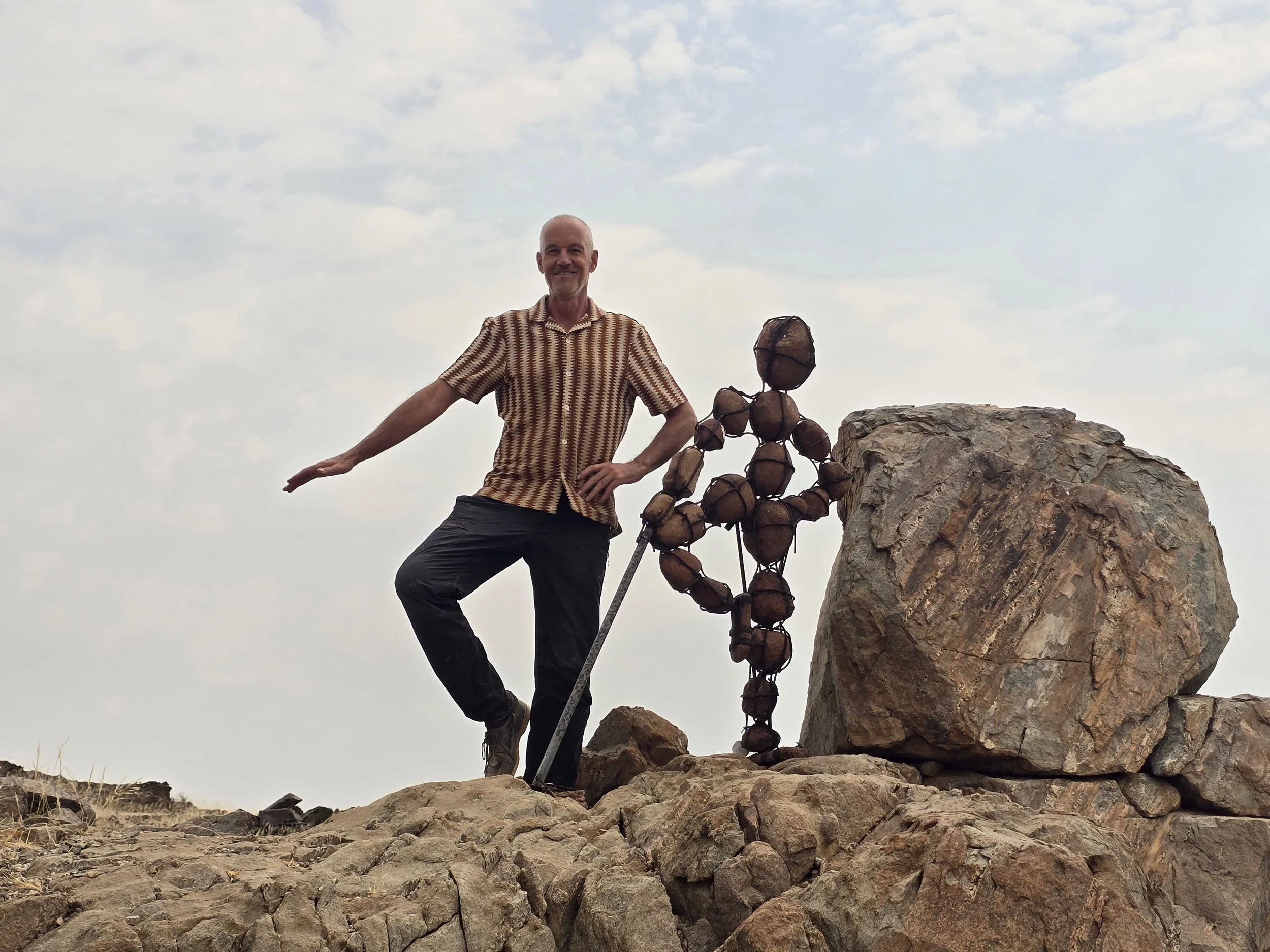
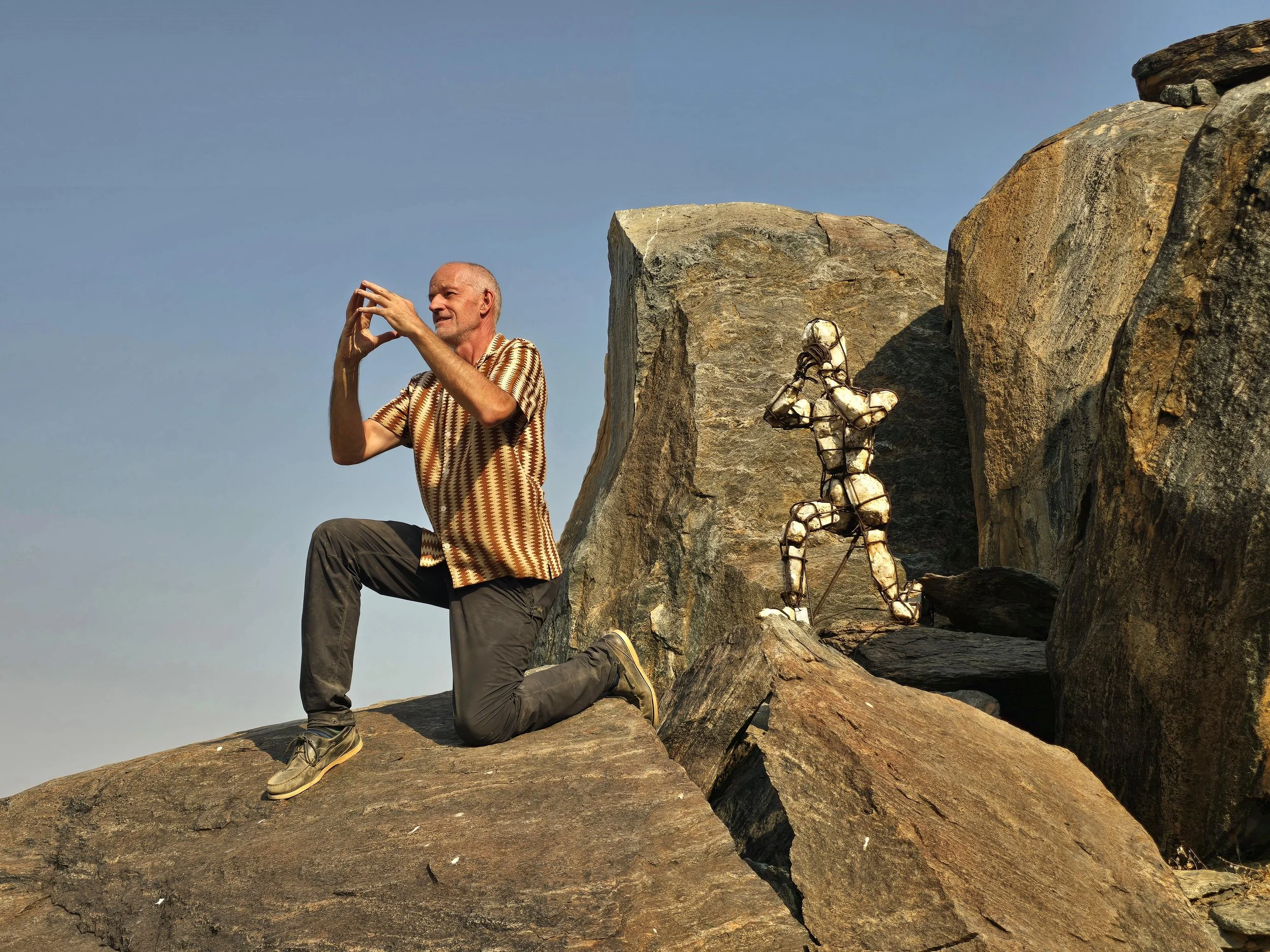
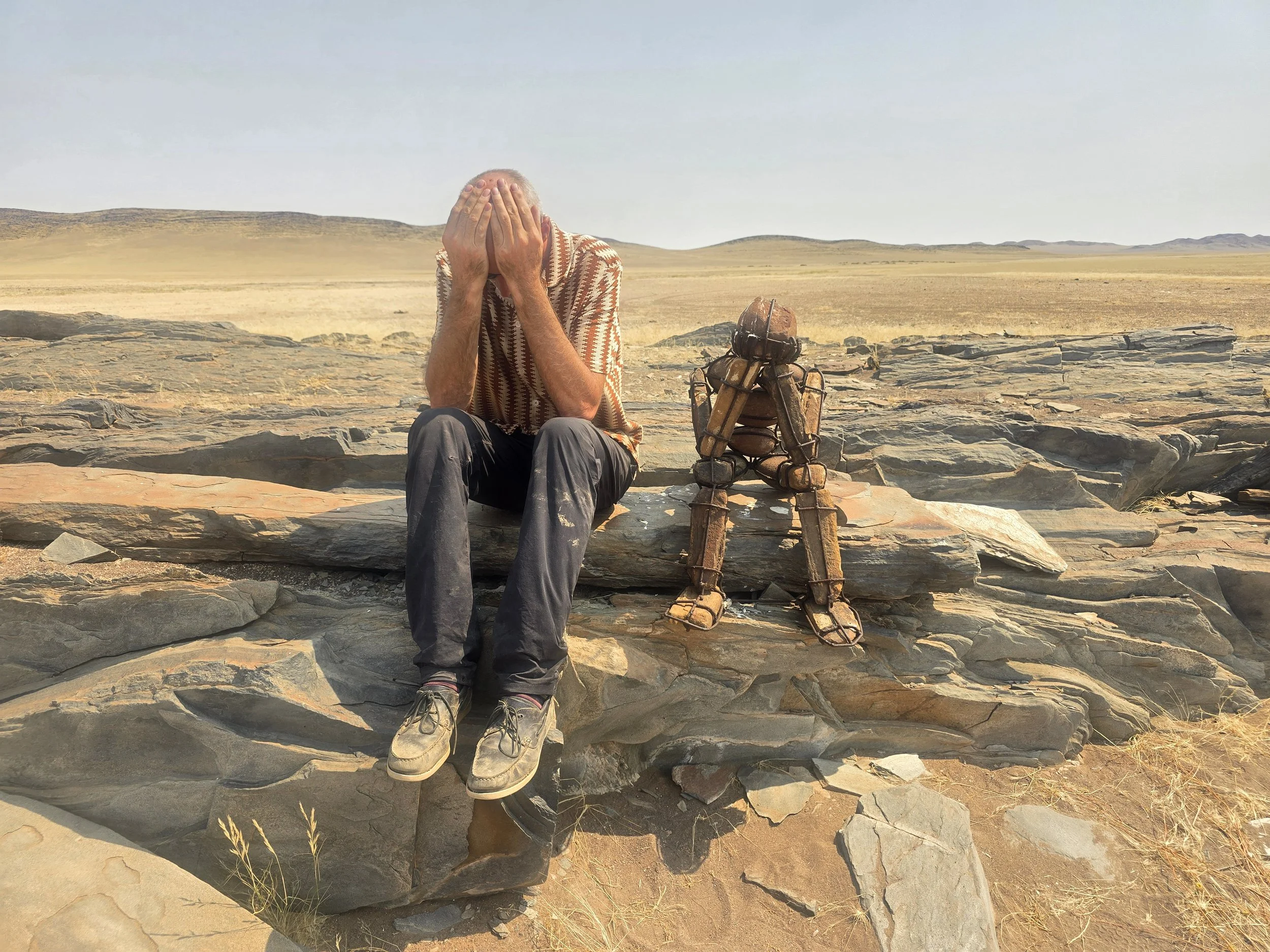
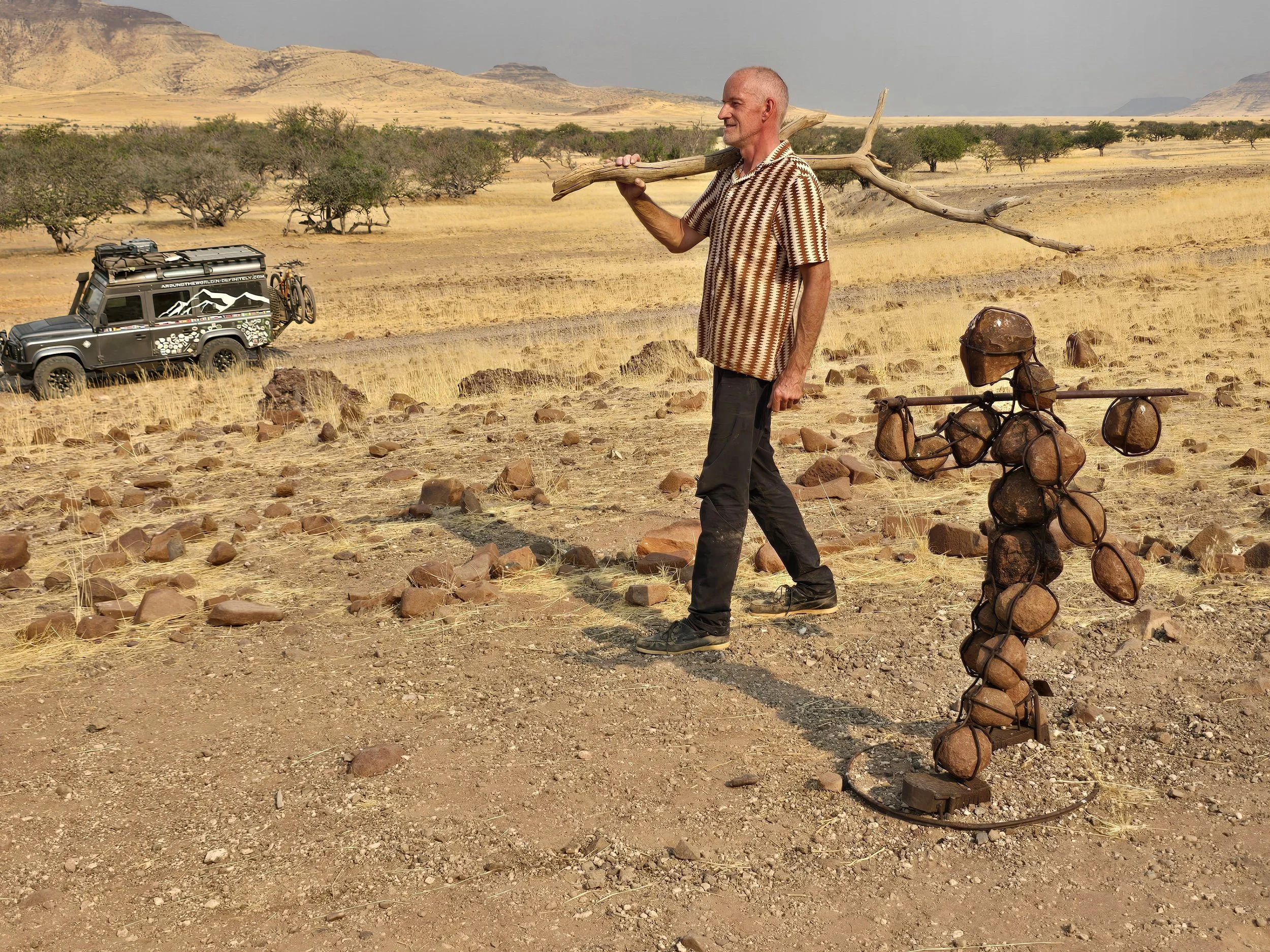
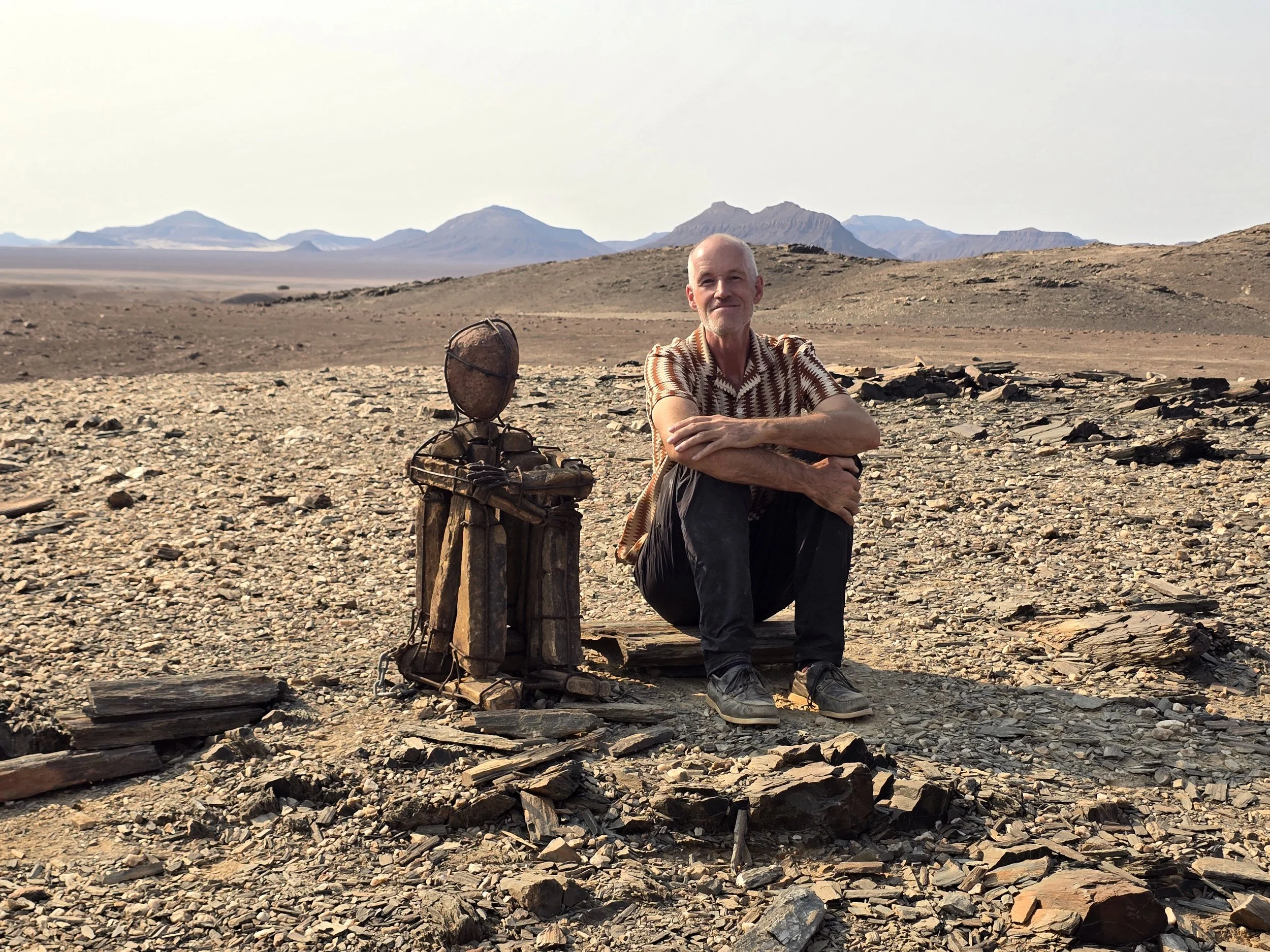

Our search took us north, south, east and west, along some truly awful tracks and somewhat inadvertently, over the tricky Joubert’s Pass. It was bad enough navigating the high, narrow, rock-strewn track in a northerly direction, but with no alternative, the return journey was considerably worse. Bob attacked the steep climb with tyres spinning and engine protesting as an acrid smell of rubber permeated the cab. For our part, we tried not to think about what we would do if he stopped. We only just made it to the top.
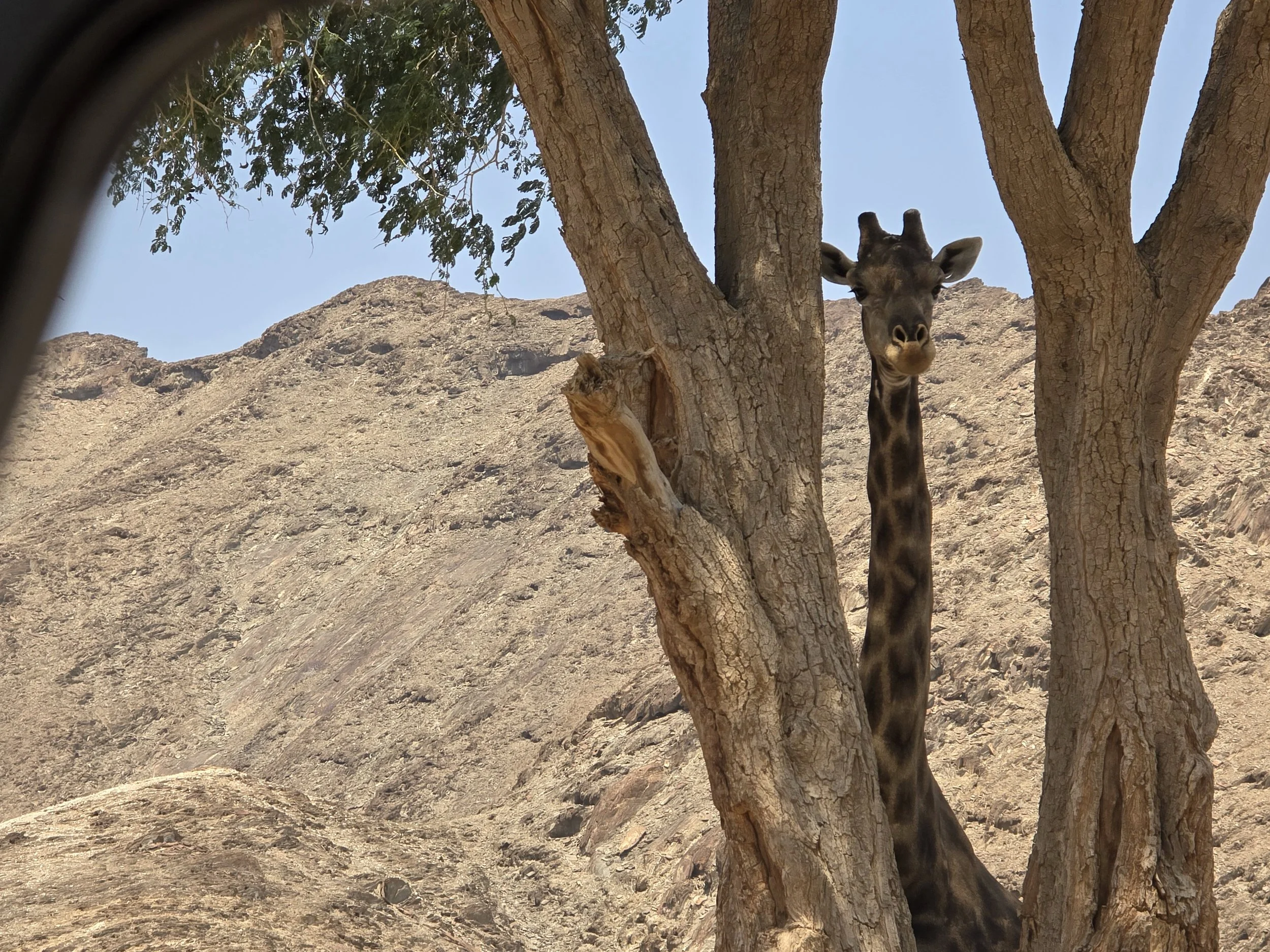
The Sahara might be the world’s largest hot desert, but the Namib is the oldest and one of the driest regions on Earth. And yet, somehow, it contains exceptionally adaptable animals. Elephants, estimated at around 100-130, lions numbering perhaps 150 and some 450-500 giraffe roam these vast spaces, able to survive by covering enormous distances between the riverbeds with meagre supplies.
geoffrey
With numbers as low as these, imagine our surprise when Geoffrey appeared at our riverbed camp one evening. He stared at us. We stared back. Four hours later, nobody appeared any the wiser and we went to bed.
Each day in the desert we saw a lone giraffe. A different one each day, or Geoffrey covering a lot of ground, we did not know.
handy repair patch
Air-con failure aside, we had been pretty pleased with Bob’s performance since leaving the mechanic in Luanda. For some strange reason, Land Rovers get a bad rap among many overlanders, most of whom prefer the less temperamental character of a Toyota. Understandable perhaps, but the next series of events strongly suggest that Bob has developed a far more advanced approach to mechanical failure: break down only when there is a reasonable chance of someone being able to fix him.
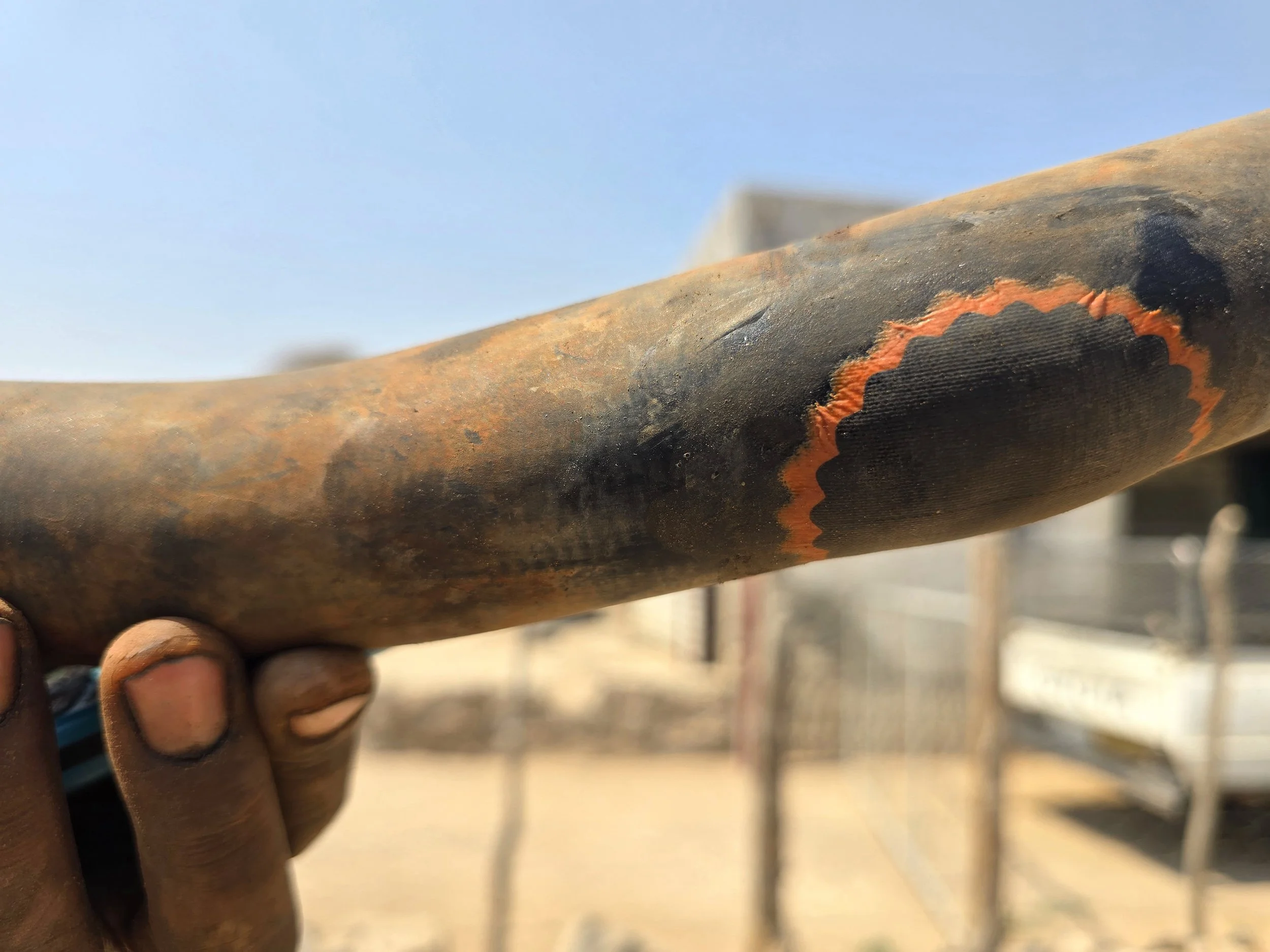
Three kilometres from the tiny desert settlement of Sesfontein, he demonstrated this newly acquired quality by splitting his lower coolant hose. Apart from a small shop, the only other business in town announced itself with a stack of dusty second-hand tyres outside a barely upright shed. As the only customer – possibly for some time – we received prompt service and were soon back on the road sporting a rather natty puncture-repair patch and placing rather more faith in Chinese glue than seemed entirely sensible.
The engine warning light came on two minutes before we reached the much larger town of Otjiwarongo. Unable to find anyone willing to work on a Puma engine, we topped up the differential oil which was leaking yet again and continued to Okonjima. Perhaps realizing that help was only going to be found further down the road, Bob turned off his engine light and continued uncomplaining.
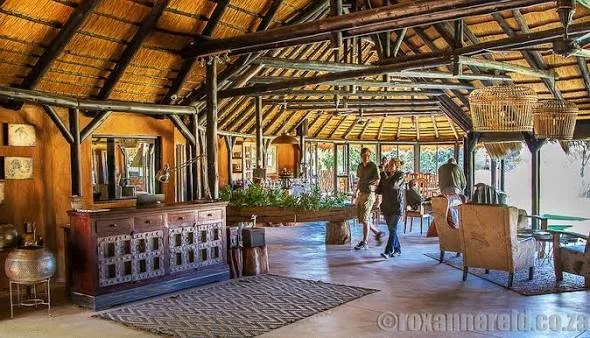
okonjima lodge
Officially registered as a non-profit organization in 1993, the AfriCat Foundation is dedicated to the long-term conservation of Namibia's large carnivores, particularly leopards. Namibian cattle farmers have traditionally struggled to co-exist with predators and the resulting loss of livestock. The usual answer to losing cattle was fairly straightforward: kill the predator responsible. The Hanssen family decided that this was both rather short-sighted and bad news for Namibia’s wildlife. Rather than killing the big cats, the younger generation chose to embrace them, transforming the family cattle farm into the Okonjima Nature Reserve, now a well-established collection of lodges and campsites where visitors can track and observe tagged leopards across the 22,000- hectare reserve.
The Okonjima Lodge is an excellent example of Namibia’s clever tourism model, based on selling what it has in extraordinary abundance: wildlife and an almost ridiculous amount of empty space. National parks, alongside privately owned reserves and communal conservancies all play their part, turning wildlife into an income stream.
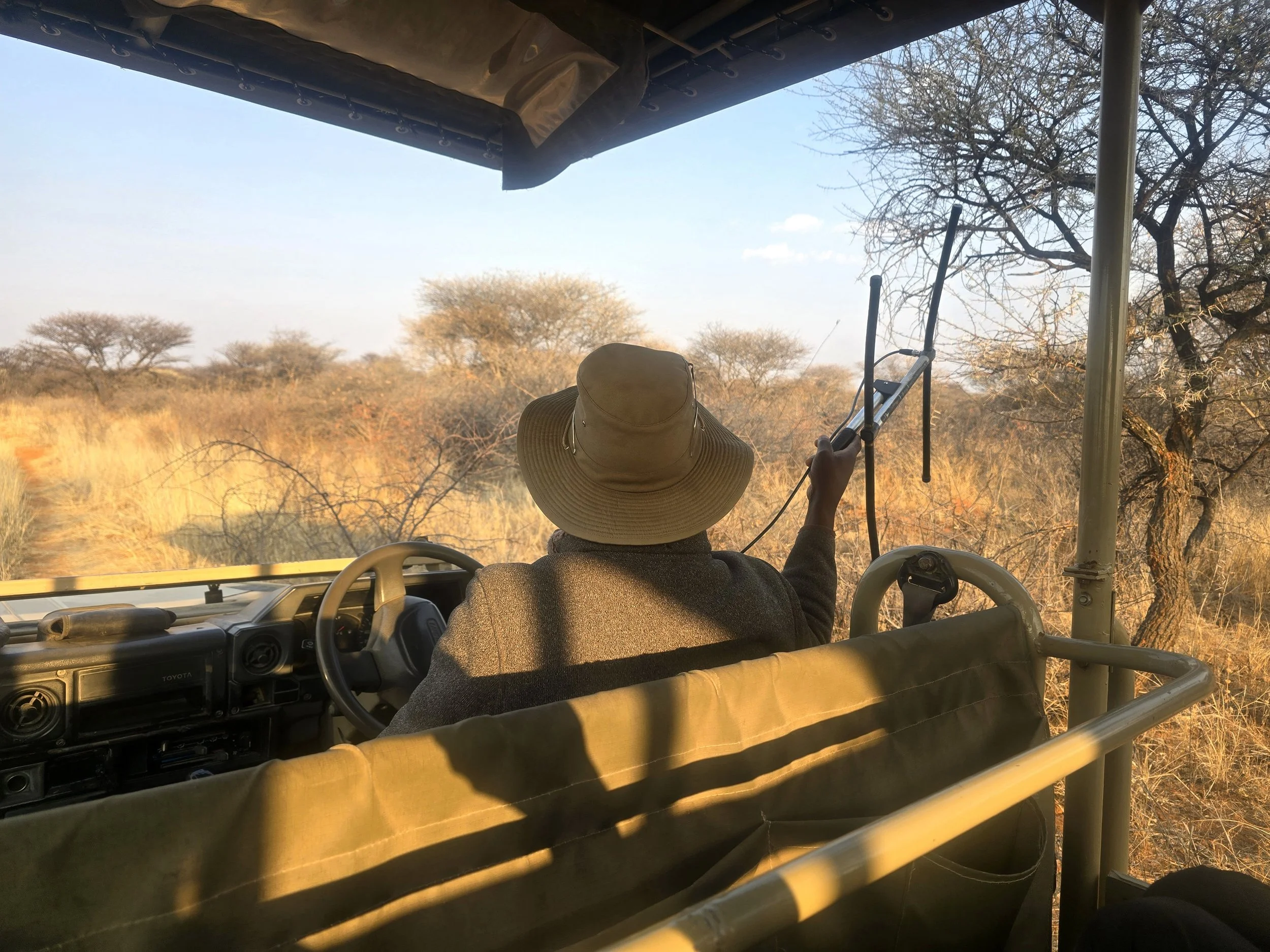
leopard tracking
The theory is simple: if an elephant is worth more alive and wandering past a lodge than dead in someone's field, there is a financial incentive to keep it that way. It is not without its problems, but after travelling through countries where wildlife and people often seem to be competing for the same scarce resources, Namibia's attempt to make conservation pay for itself is striking. It has, rather cleverly, turned a shortage of people into a tourist attraction.
Lodges range from basic bush campsites to eye-wateringly expensive luxury accommodation, with some demanding US$2,500 or more per person. Okonjima sits somewhere in the middle range and its popularity meant we only just managed to secure a single night. Leopard tracking was an additional cost with the obvious proviso that leopards are not particularly interested in keeping tourist schedules.
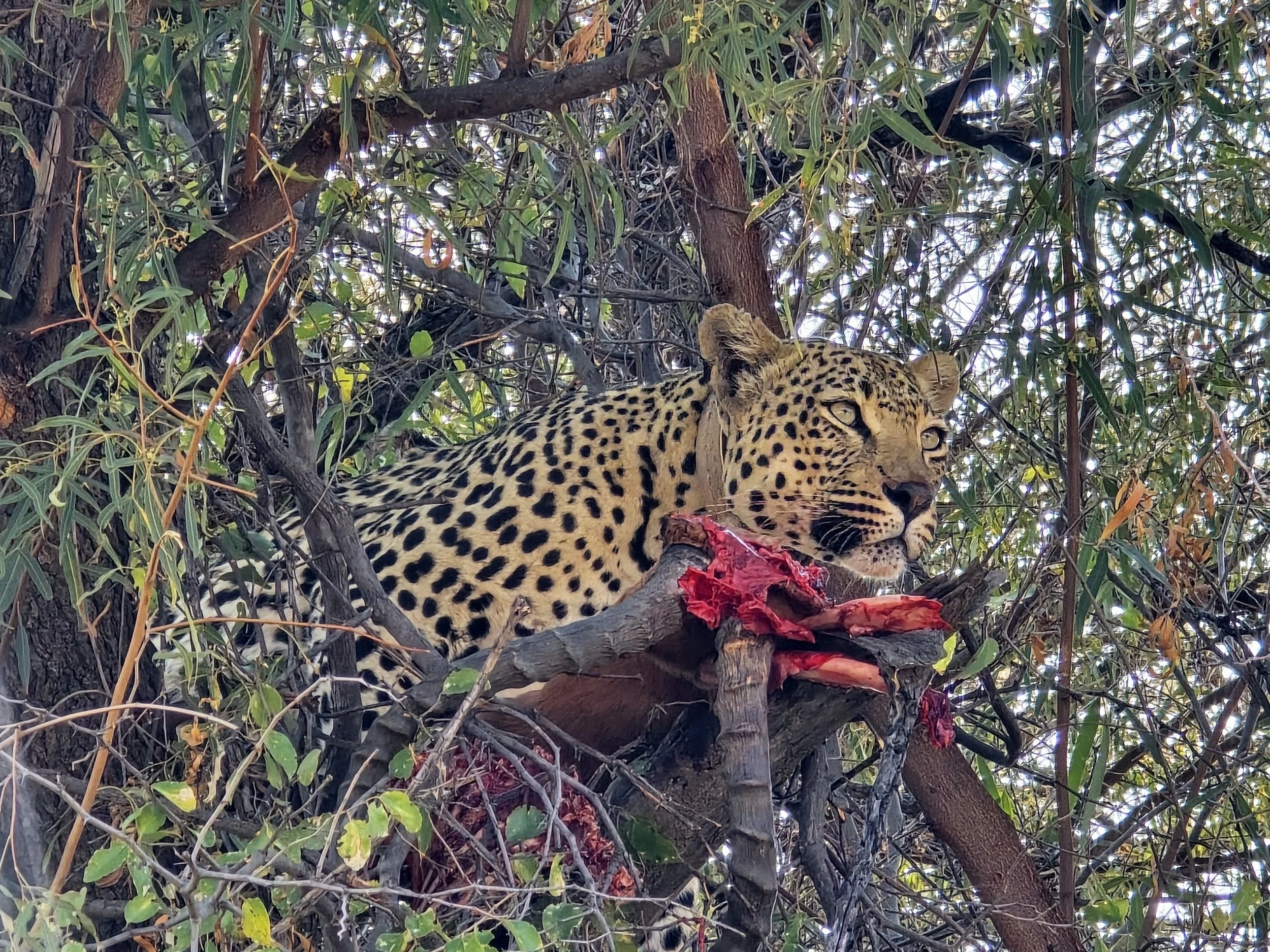
There were six of us in the safari vehicle, plus the driver, who drove through dense vegetation waving around what looked suspiciously like an old-fashioned TV aerial. The low-power, long-range tracking system was tuned in to the leather collar of a young male leopard who, rather uncooperatively, managed to avoid our attempts to find him. Another of the vehicles had been more successful, tracking their female up a tree where she was enjoying the remains of an impala. Clearly accustomed to regular sightings of the all too common safari vehicles, she remained less than five metres away, completely unconcerned by the attention.
At the foot of the tree, a large brown hyena – another normally shy predator - was patiently waiting for errant parts of the impala.
It is this combination of experienced trackers, radio technology and protected, habituated animals that makes such sightings possible. There is an obvious ethical balance to this sort of tourism, but done properly, it gives these animals a value that can help secure their conservation and survival.
We reached the capital of Windhoek just as the engine warning light annoyingly reappeared on the dashboard. After fixing the leaking air-con and repairing the fridge, which had spent recent weeks randomly freezing and defrosting our food, we went to see Henry, president of the local Land Rover club and something of an expert on keeping elderly British machinery alive.
The news was not good. Bob had diesel bug - microbial contamination that had spread through his entire fuel system. The cure was expensive. High- and low-pressure fuel pumps, injectors, pipes and valves needed replacing along with a flushing of everything that could still be flushed. Smaller issues were also addressed. Doors were realigned, leaks were sealed, wipers were replaced and the central locking was finally repaired, something that had not worked properly for years.
By the time our friends flew in from Australia to join us for a month of self-drive adventures, Bob had never been in better shape ….
…. One kilometre short of Swakopmund, after a brisk trouble-free 300 km drive, he emitted the most appalling grinding noise imaginable and stopped. He managed another few hundred yards before stopping again, at which point the dash lit up like a Christmas tree. Fortunately, he still had one final act of courtesy left: he rolled gently into a conveniently located Land Rover garage in the centre of town.
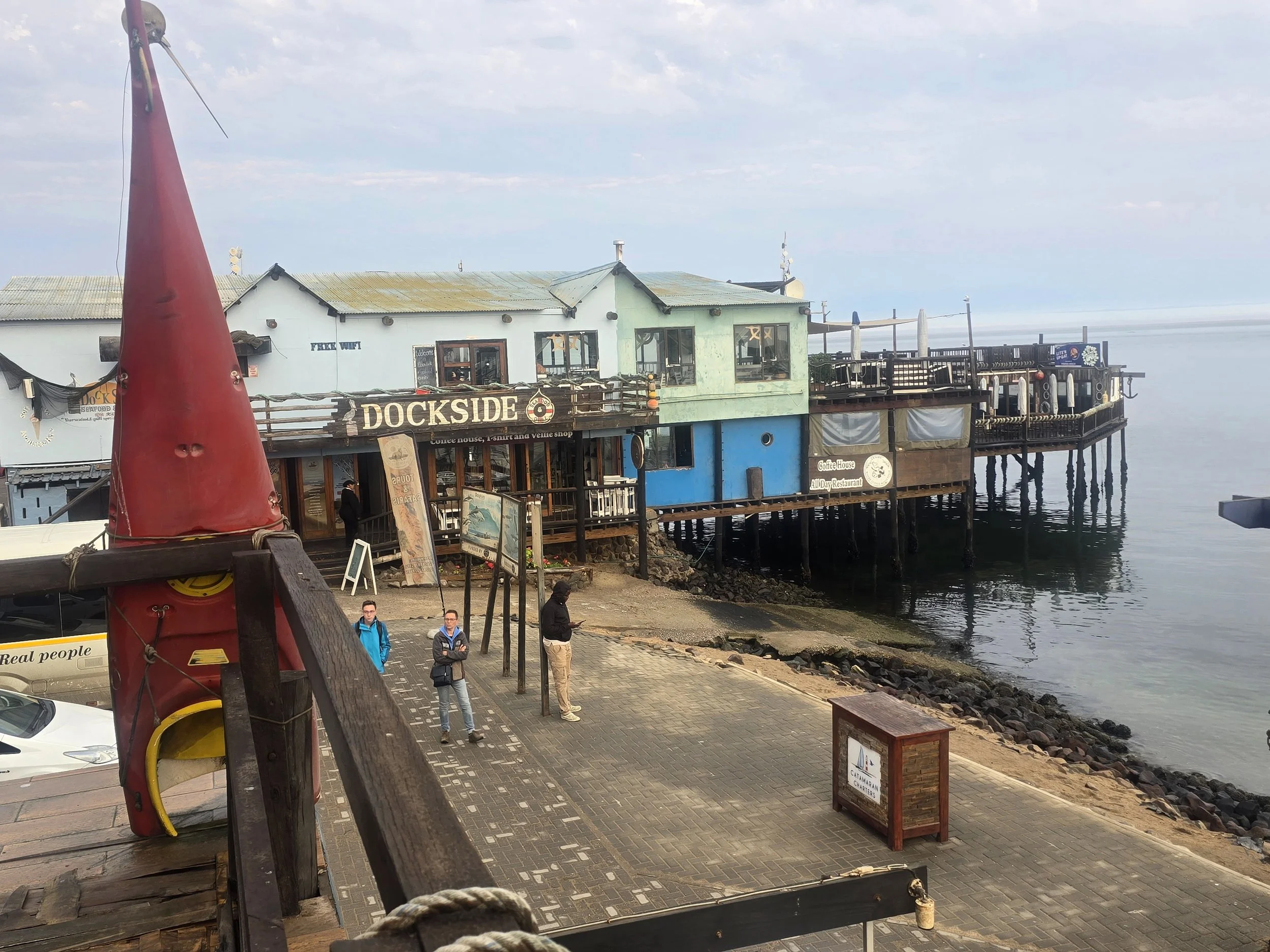
walvis bay
The culprit turned out to be the disintegration of one of his rear brake mud shields, an accessory much scorned by more knowledgeable African drivers. The metal plate had corroded leaving rusted fragments rubbing against the ABS cable. With no fewer than six men on the job, a pit-stop-worthy repair was executed. Wheels off, offending plates discarded, wheels back on and Bob was good to go. Surreptitiously timing proceedings, I clocked the whole operation at less than ten minutes. Was I still in Africa?
Swakopmund and its neighbour Walvis Bay have turned the rather unlikely combination of desert and freezing Atlantic Ocean into Namibia’s adventure capital. Within a few kilometres you can quad bike across the dunes, throw yourself down one head first whilst lying on a piece of plywood, parachute out of an aeroplane, kayak among seals, ride fat bikes into the desert or head off in a 4x4 towards Sandwich Harbour for some serious sand driving.
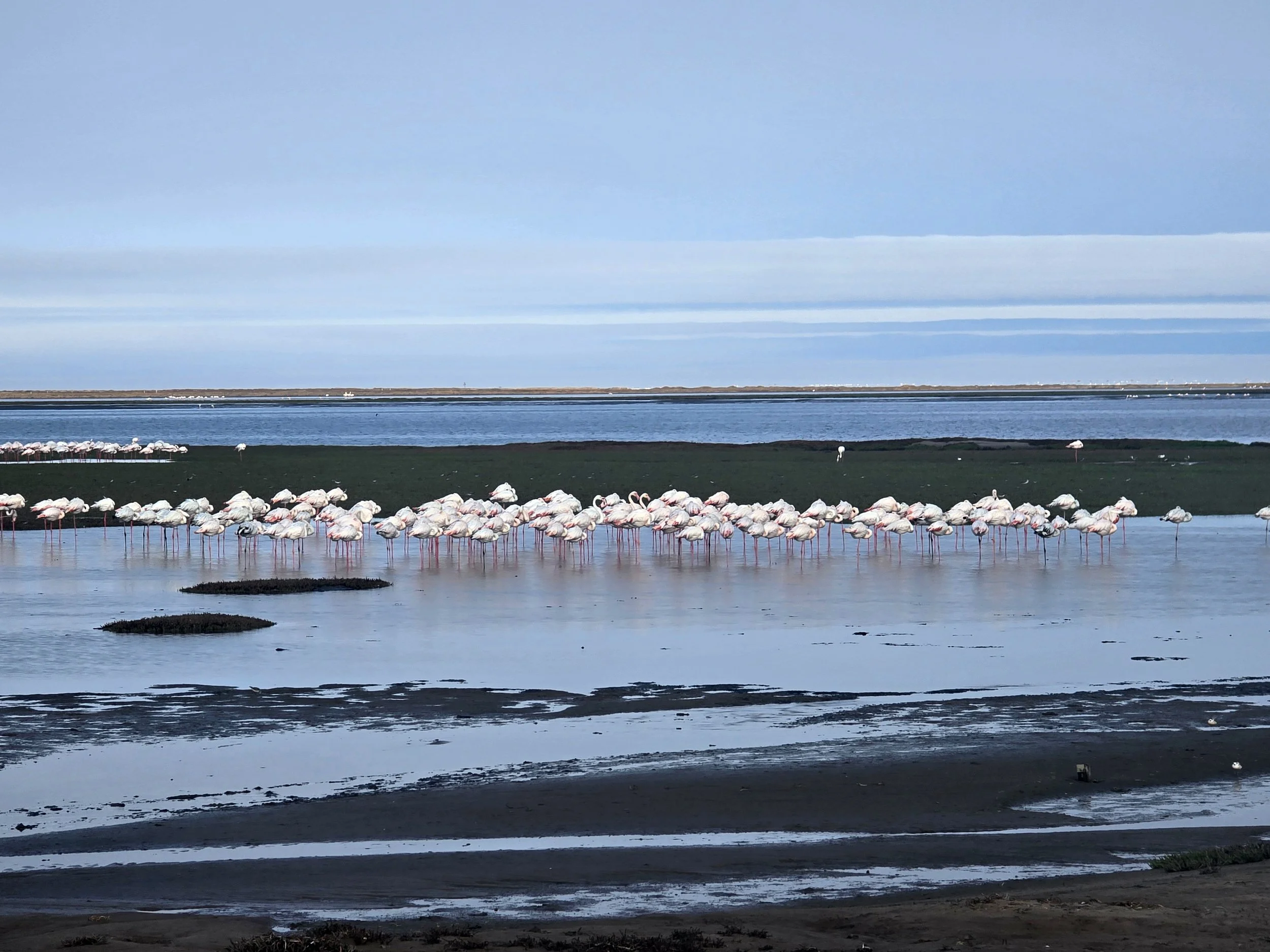
walvis bay flamingos
After some very hit-and-miss touring experiences elsewhere in Africa, Namibia was remarkably efficient. Everything ran to time and we barely drew breath as we raced from one experience to the next. We each had our favourite, but the vast flocks of pink flamingos, large beaked pelicans and enormous colony of seals were hard to beat.
Pelican Point, just outside Walvis Bay, is home to one of Namibia’s great wildlife spectacles: a vast colony of Cape fur seals. Numbers vary considerably throughout the year, but tens of thousands can gather here, with the rocky peninsula providing a permanent base for resting and breeding. The surrounding waters are fed by the Benguela Current, one of the world’s most productive marine ecosystems, which supplies an abundant source of food.
The portly males provide much of the entertainment, battling over harems that can contain 25 females or more. Their efforts are accompanied by an incessant cacophony of barking, growling, splashing and general seal-related chaos. It is not a quiet nor sweetly fragranced neighbourhood.
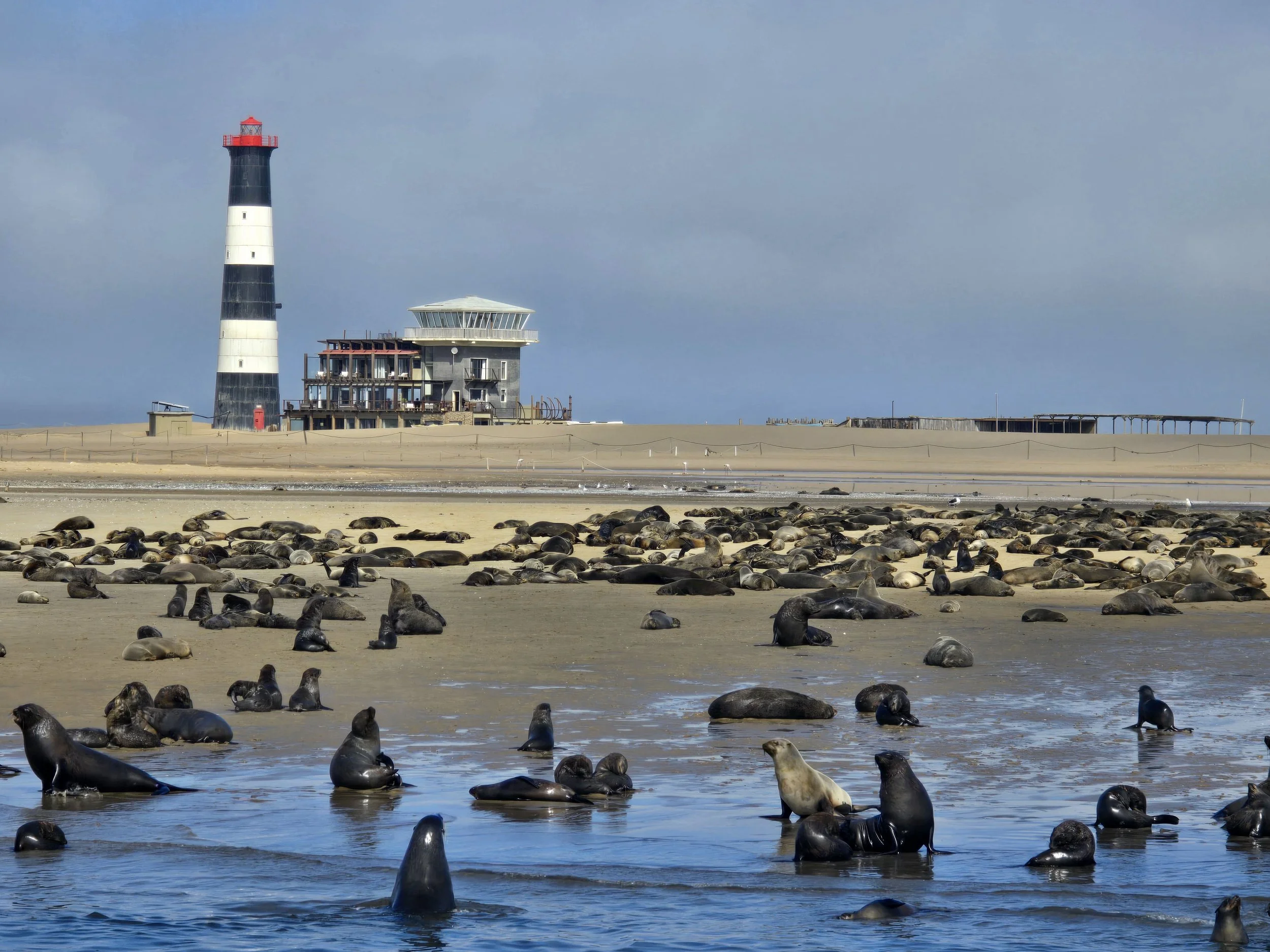
cape fur seals
One of the more popular ways to visit is by kayak, launched into the tidal lagoon from a long sandy spit. The shallow water was full of young seals seemingly delighted to have something new to investigate. Curious by nature, they surrounded the kayaks, popping up to have a good look at us with their large, round eyes. Their repertoire included athletic backflips and headstands, the occasional nibble on the end of an oar and, occasionally floating past on their backs as if hoping we might provide a tummy scratch.
Travelling further south and inland, we rattled over hundreds of kilometres of corrugated tracks to reach Sossusvlei, a salt and clay pan surrounded by a sea of wind-sculpted red dunes. The park is tightly controlled, with the entrance gates opening and closing at sunrise and sunset and 60 kph speed limits enforced along the 60 km of tarmac road from the gate to the pan This makes it difficult to catch the dunes at first or last light unless you stay inside the park, where the limited number of campsites and lodges allow their guest’s an hour’s head start on those of us unfortunate to be lodged outside but with rather more money left in our pockets. Fortunately, the dunes are spectacular at almost any time of day.
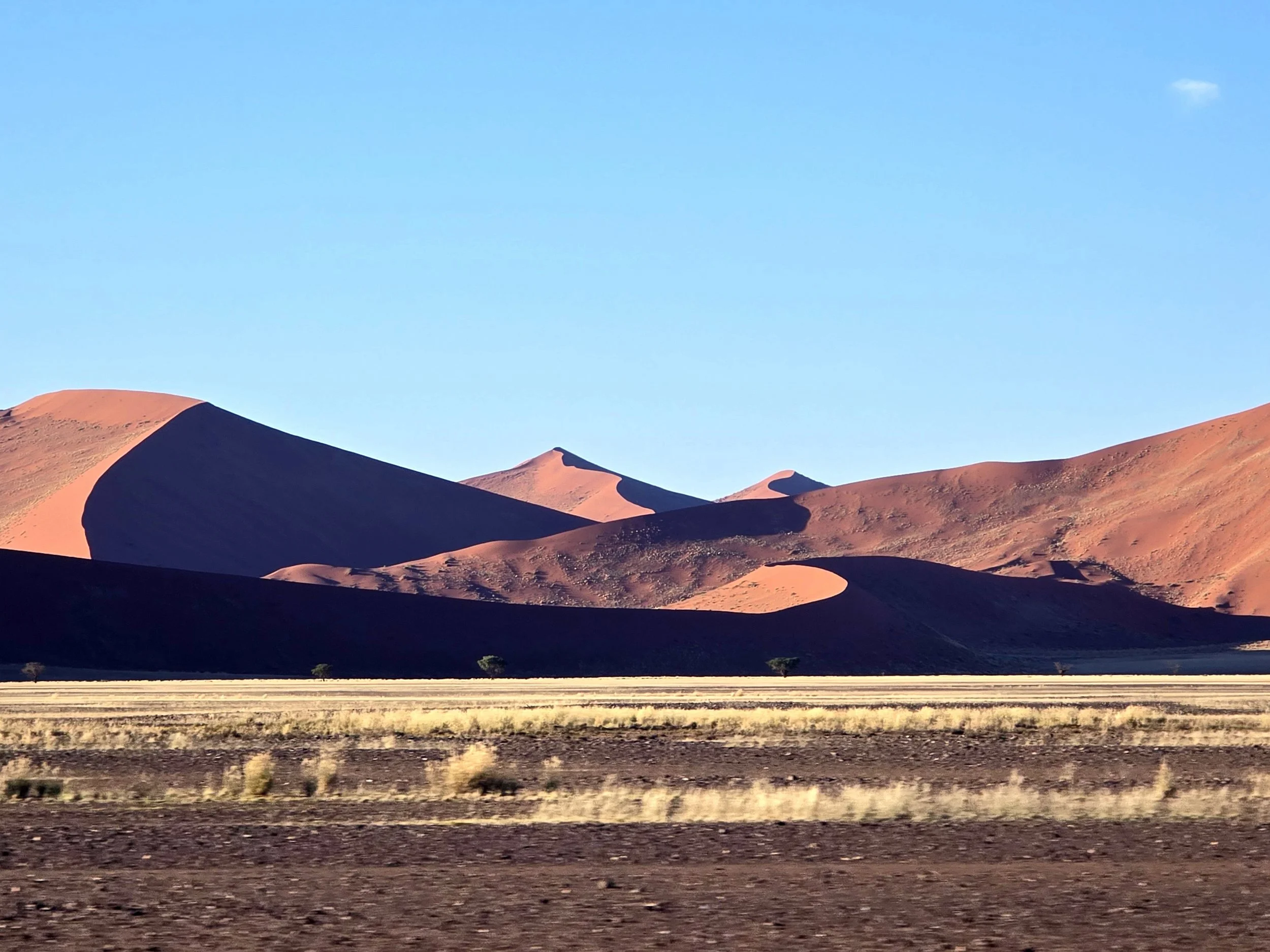
sossusvlei
A lot had changed since our last visit. My recollection, admittedly now more than 25 years old, was of a motley collection of desert-weary vehicles lined up outside a flimsy gate which, when opened, triggered something resembling the Wacky Races. Without the guidance of any roads, everyone surged forward heading in all directions, caught up in the excitement of trying to beat the sunrise to the pan.
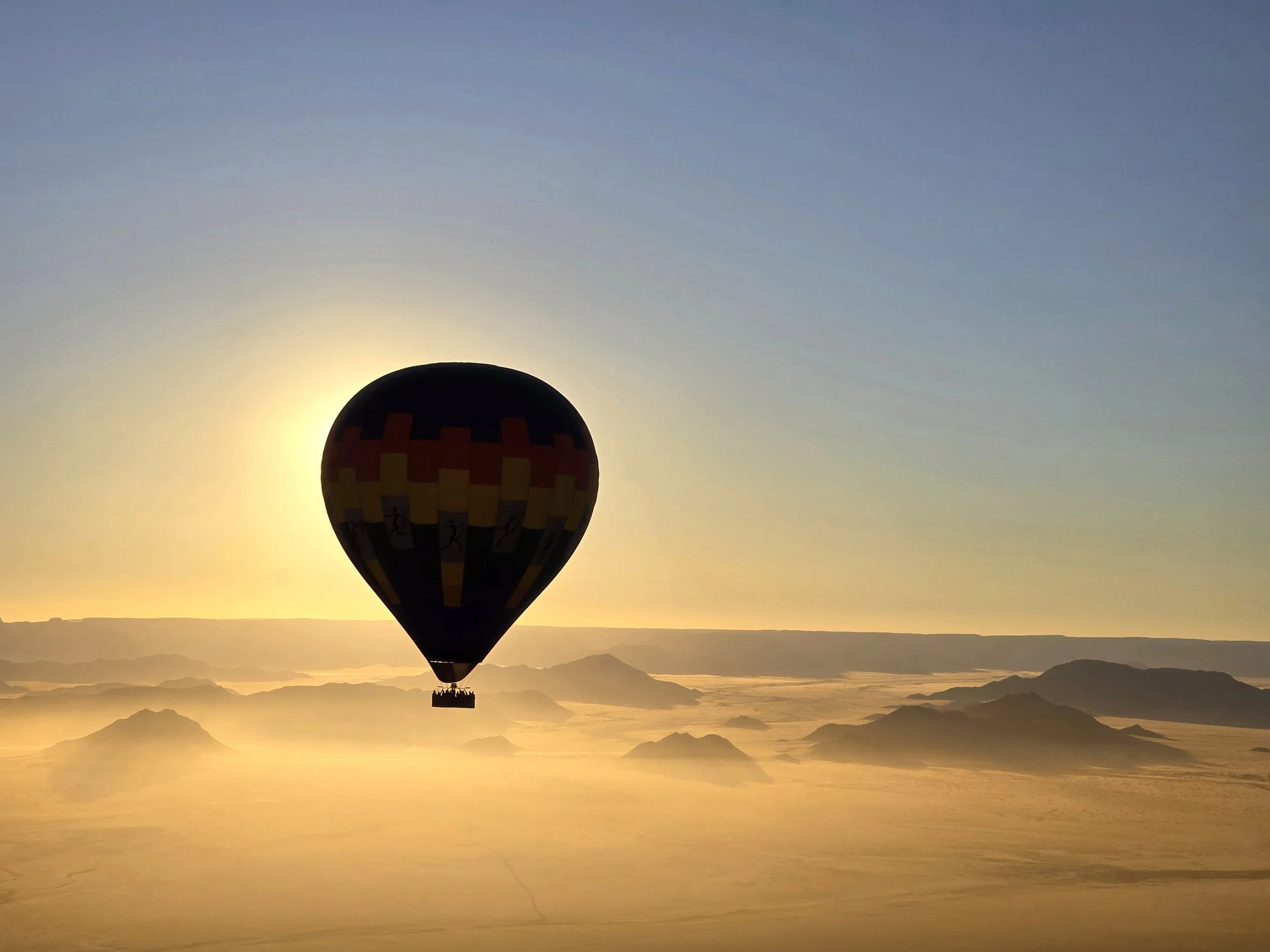
Gliding over the top of the dunes in a hot-air balloon was a first for all of us and, at US$500 per person, not exactly an impulse purchase, but it turned out to be worth every cent. Driving into the desert before sunrise, we watched as three brightly coloured balloons slowly took form. Their wicker baskets were divided into five compartments, the pilot in the centre and four excited tourists in each of the surrounding sections.
Instead of the cold, windy and noisy experience we had imagined, the balloon provided a smooth and serene glide over one of the most extraordinary landscapes in the Namib. There was, of course, one small limitation: the pilot could control our altitude but not our direction so we simply went wherever the wind decided to take us. Whether by good fortune or some other force at play, we landed just 15 minutes from white-linen-covered tables laid out between the dunes. An impressive breakfast buffet awaited alongside a reassuring number of bottles of champagne.
Hoping to survive the corrugations a second time, we headed back to Windhoek. Just 600 metres from our destination, Bob’s clutch slipped twice. Back at Henry’s garage, the worst was confirmed: we needed a new one. Determined to avoid any more surprises, we agreed that all four shock absorbers should be replaced as well.
Watching our friends depart for a few days in Victoria Falls, we reluctantly took stock of our dwindling finances and hoped that Bob had now exhausted his repertoire of mechanical surprises.