Angola
/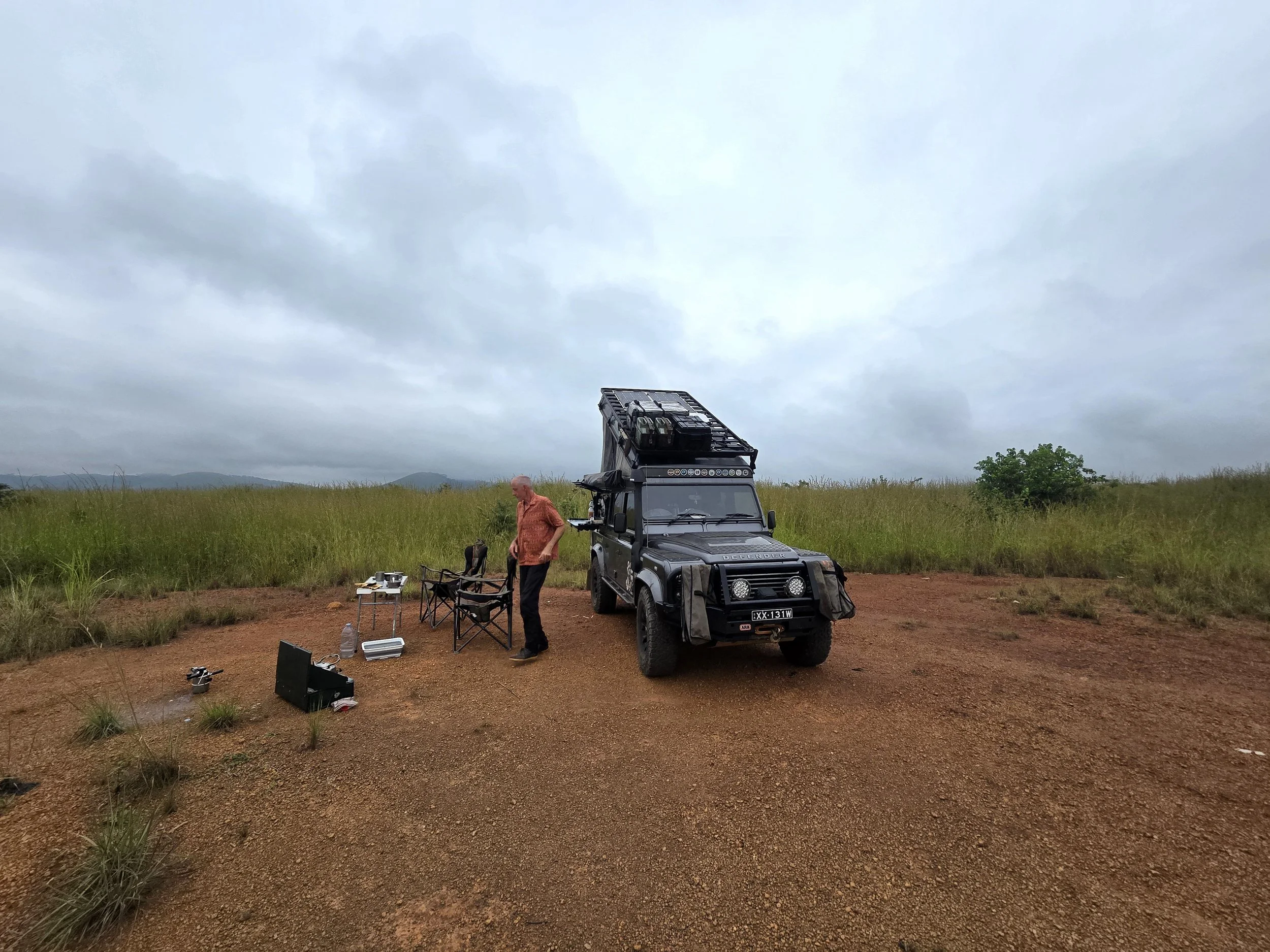
abandoned quarry pit
After surviving a border crossing in the Democratic Republic of Congo that contained all the ingredients required for a perfectly respectable riot, we rolled into Angola, Africa’s seventh largest country.
Few nations have been fought over with such enthusiasm. The Portuguese wanted it. Three rival liberation movements wanted it. The Cold War superpowers wanted influence over it. More recently, the oil industry has wanted what lies beneath it. After twenty-seven years of civil war, peace finally arrived in 2002 and Angola embarked on one of Africa’s most remarkable reconstruction projects.
The war had left little untouched. Bridges had been blown apart, railways abandoned, roads reduced to little more than optimistic suggestions and millions of landmines scattered across the countryside. Oil money, helped by billions of dollars in foreign investment, transformed the country at remarkable speed. Highways, ports, airports and railways appeared across the landscape, while the ruling MPLA – the party that has governed since independence – attempted the rather more difficult task of turning oil wealth into widespread prosperity.
Looking through Bob’s windscreen, however, none of this was immediately obvious. Northern Angola still belonged to the Congo Basin. Dense rainforest pressed in from both sides of the road and settlements appeared only occasionally. Fuel stations, when they did appear, were usually closed, an impressive achievement for one of Africa’s largest oil producers. Angola exports crude by the tanker-load but, thanks to limited refining capacity, can still struggle to put fuel into its own pumps. Africa has never allowed common sense to interfere with geography or economics.
Fortunately, we had filled up in the DRC.
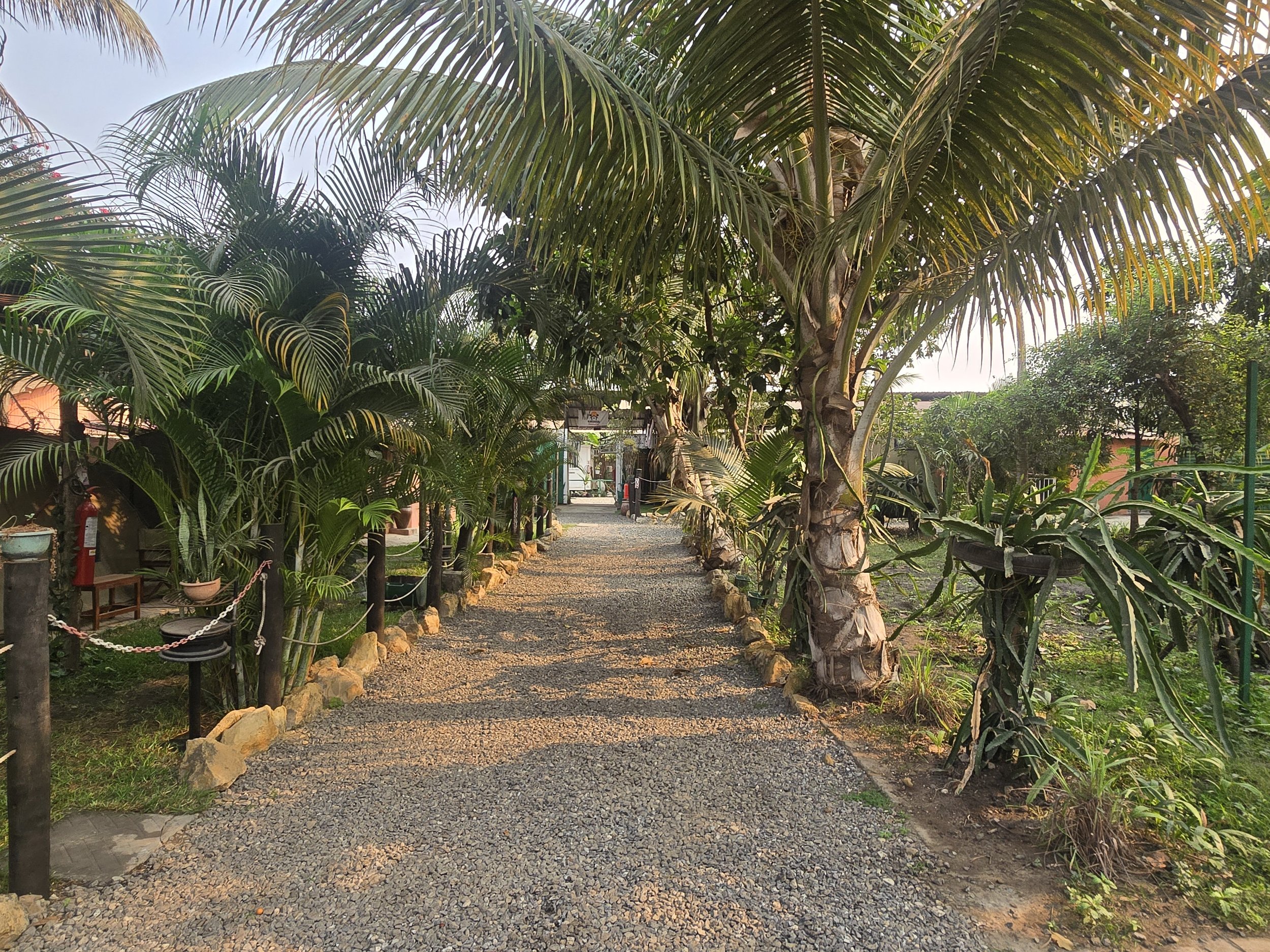
kakuakos lodge oasis
The road itself was excellent. Unfortunately, Bob wasn’t. Still resolutely committed to limp mode, we crawled south at little more than 40 kph. It did at least give us plenty of time to admire the changing landscape. Gradually the rainforest loosened its grip, giving way to open woodland and broad savannah and the horizon retreated into the distance, hinting at the immense scale of the country ahead.
Abandoned quarry sites aside, our first stop was Kakuakos, the overlanding camp a few miles north of Luanda and the first genuine refuge for southbound travellers since Nigeria. We had been slightly concerned there wouldn’t be room. There was.
Getting inside proved harder than expected. We’d messaged the owner, Luis, beforehand, but he had sensibly concluded that our WhatsApp was a scam. After eventually attracting someone’s attention through the imposing razor-wire perimeter, someone appeared to push open the gate and we were in.
luis and juliet
The only other residents were two German women in an expedition truck roughly the size of a detached house. Travelling south they had been refused entry into Namibia; something to do with their two small dogs and were now trying to ship the truck back to Pointe-Noire to avoid crossing the DRC, which had refused to issue visas. Their initial plan of putting the truck on a ship in South Africa back to Germany was no longer an option and they were now faced with the long, challenging drive back the way they had come. Suddenly Bob’s problems didn’t seem quite so unreasonable.
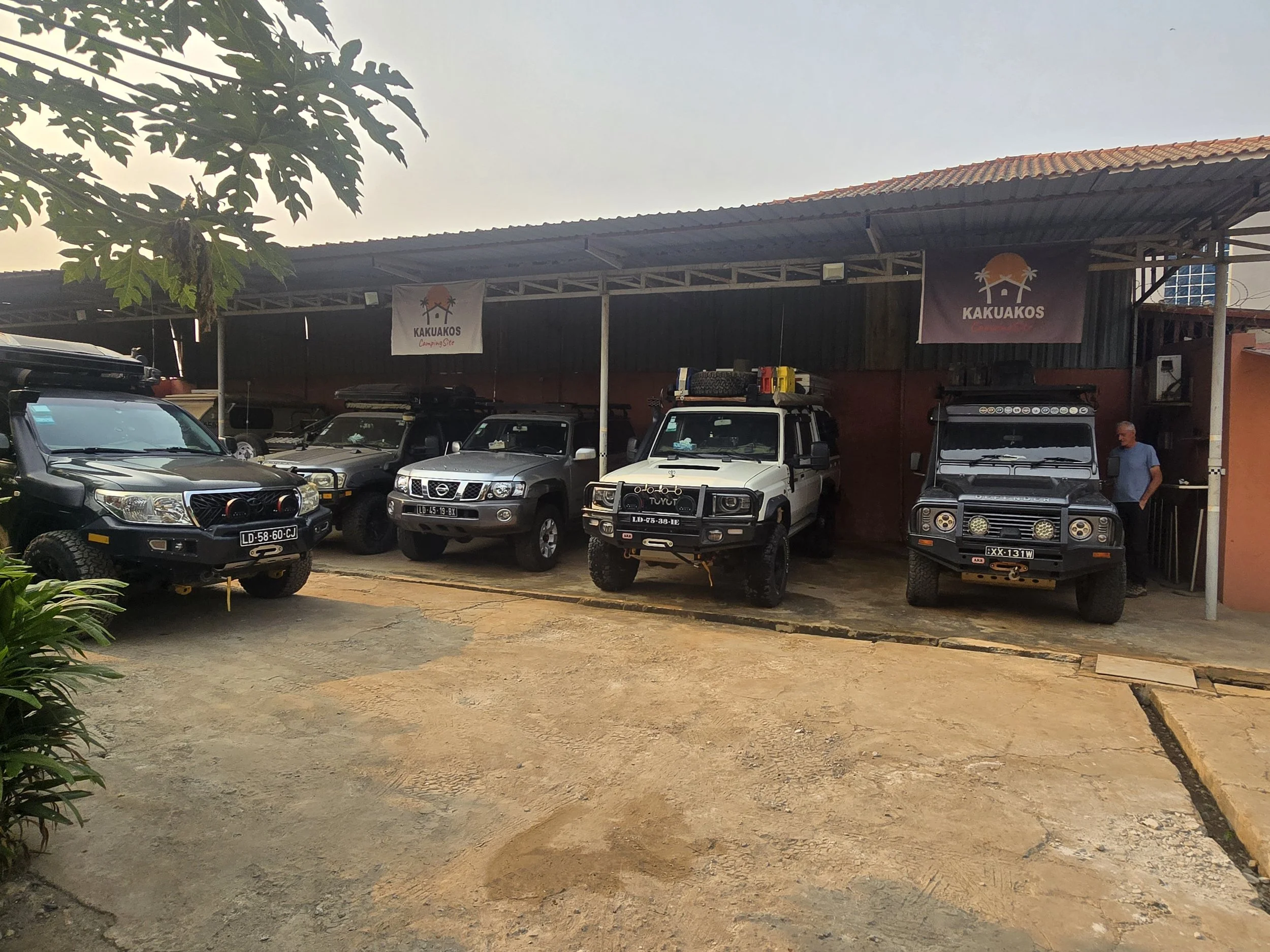
bob on trickle charge at kakuakos
Overlanders may have been scarce, but mosquitoes certainly weren’t. They arrived in such numbers that it felt as though somebody had rung a dinner bell. In a country where malaria remains one of the leading causes of death, they demanded rather more respect than they appeared willing to show us.
Fortunately, the camp itself was superb. Beyond the dusty, dirty and chaotic streets outside, where groups of hopeful entrepreneurs appeared every few metres asking for money, Luis and his wife Juliet had created an oasis. Four generators quietly compensated for the national electricity supply, the food was excellent, the bar well stocked, the pool was clean and refreshing and hot water was available on tap.
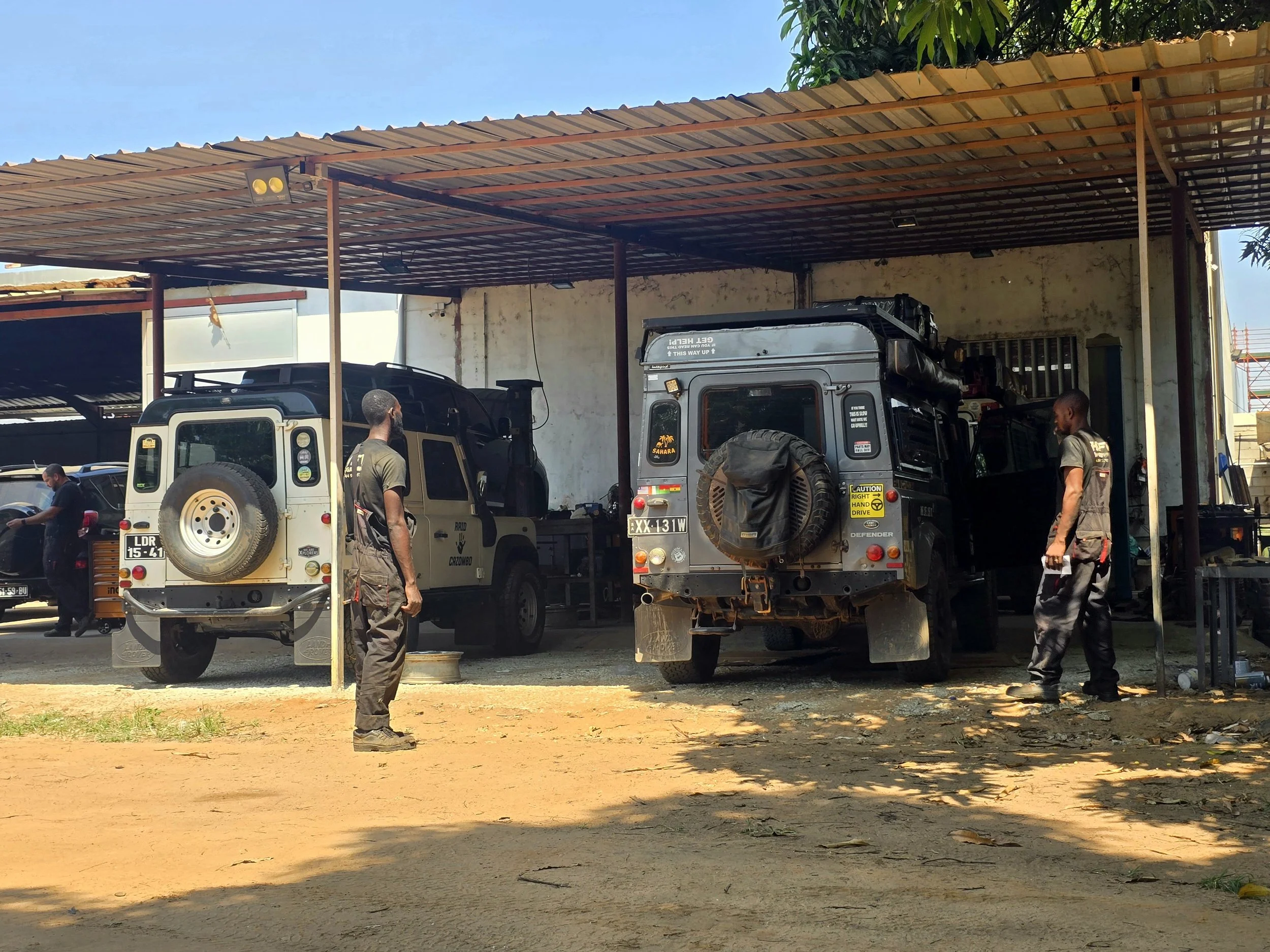
HFV garage
Before relaxing amid the delights on offer, we headed off to the local Defender specialist, eventually locating him behind another intimidating wall, complete with guard dogs that looked far more interested in us than we were in them.
Originally from Coimbra, Portugal, he immediately spotted the sticker on Bob’s back door from his hometown and, for a brief moment, optimism raised its head. Several hours of diagnostics, wiring repairs and mechanical head-scratching later, optimism quietly left again.
Bob remained firmly committed to limp mode.
There was a small win. Our slow oil leak that we had been aware of since The Gambia, nearly 12 months ago, was traced to the gearbox. The repair would take two or three days, which, by this stage of the journey, sounded positively efficient.
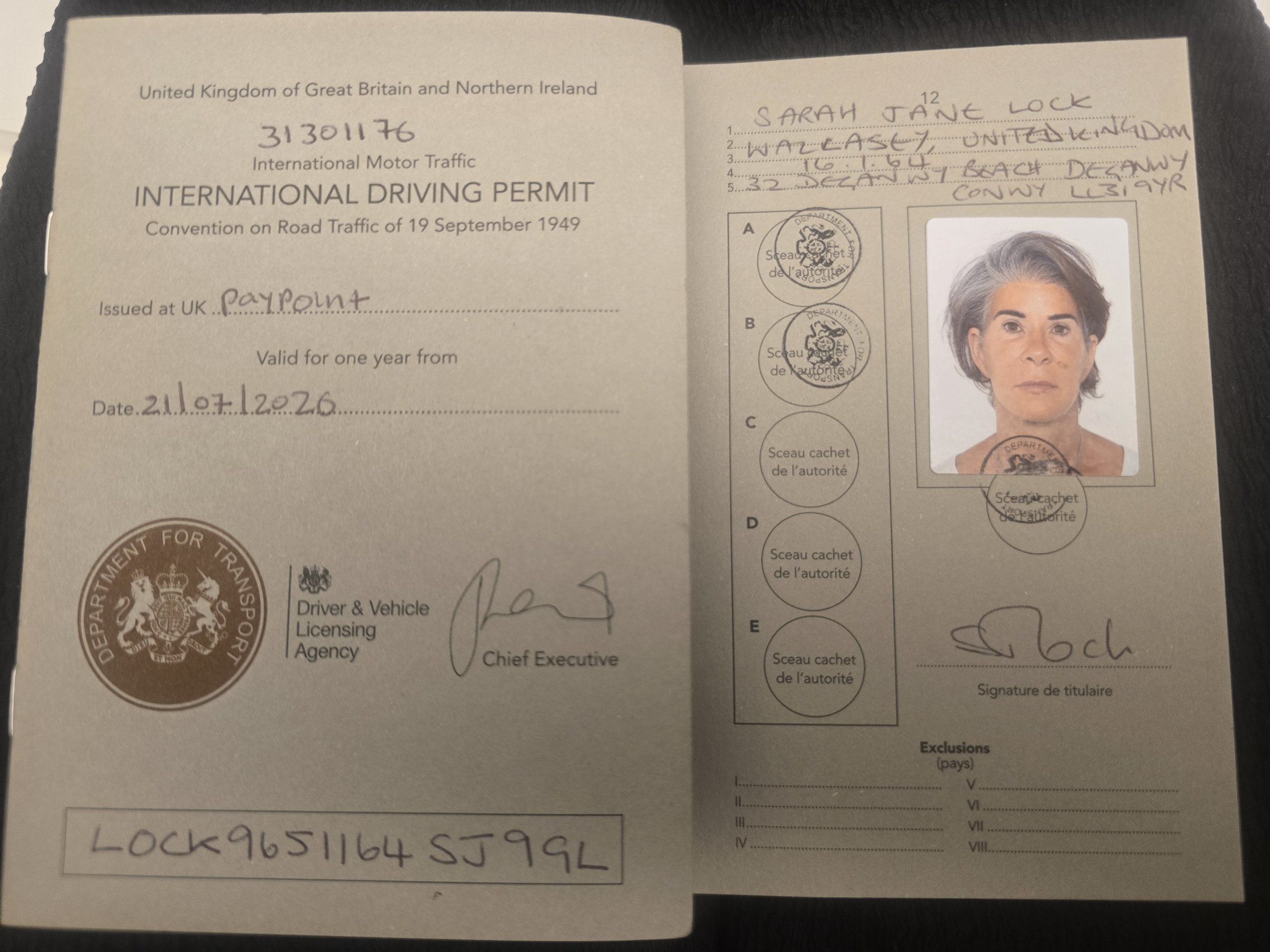
idp
While Bob continued his mechanical protest, we turned our attention to everything else. New Passports, DPT boosters, new bicycles, a heavy-duty bike rack and renewing our International Driving Permits.
I suspect very few overlanders actually carry one. Ours is a small grey cardboard booklet with a passport photograph stapled inside, produced by a diminishing number of PayPoint shops in the UK for the princely sum of £5. Within Africa it has proved to possess near-magical powers.
On countless occasions, when discussions at police checkpoints had reached an impasse and every other document had failed to impress, producing the IDPO has transformed suspicious officials into smiling bureaucrats. Quite why remains one of the Continent’s great mysteries. We long ago stopped questioning it.
Unbeknown to us, Angola had recently changed the rules governing how long foreign vehicles could remain in the country. The plan had been simple enough: leave Bob with Luis while we flew back to the UK for a couple of months, returning with fresh passports, new bikes, and almost certainly, more Land Rover parts.
Unfortunately, Angola had other ideas.
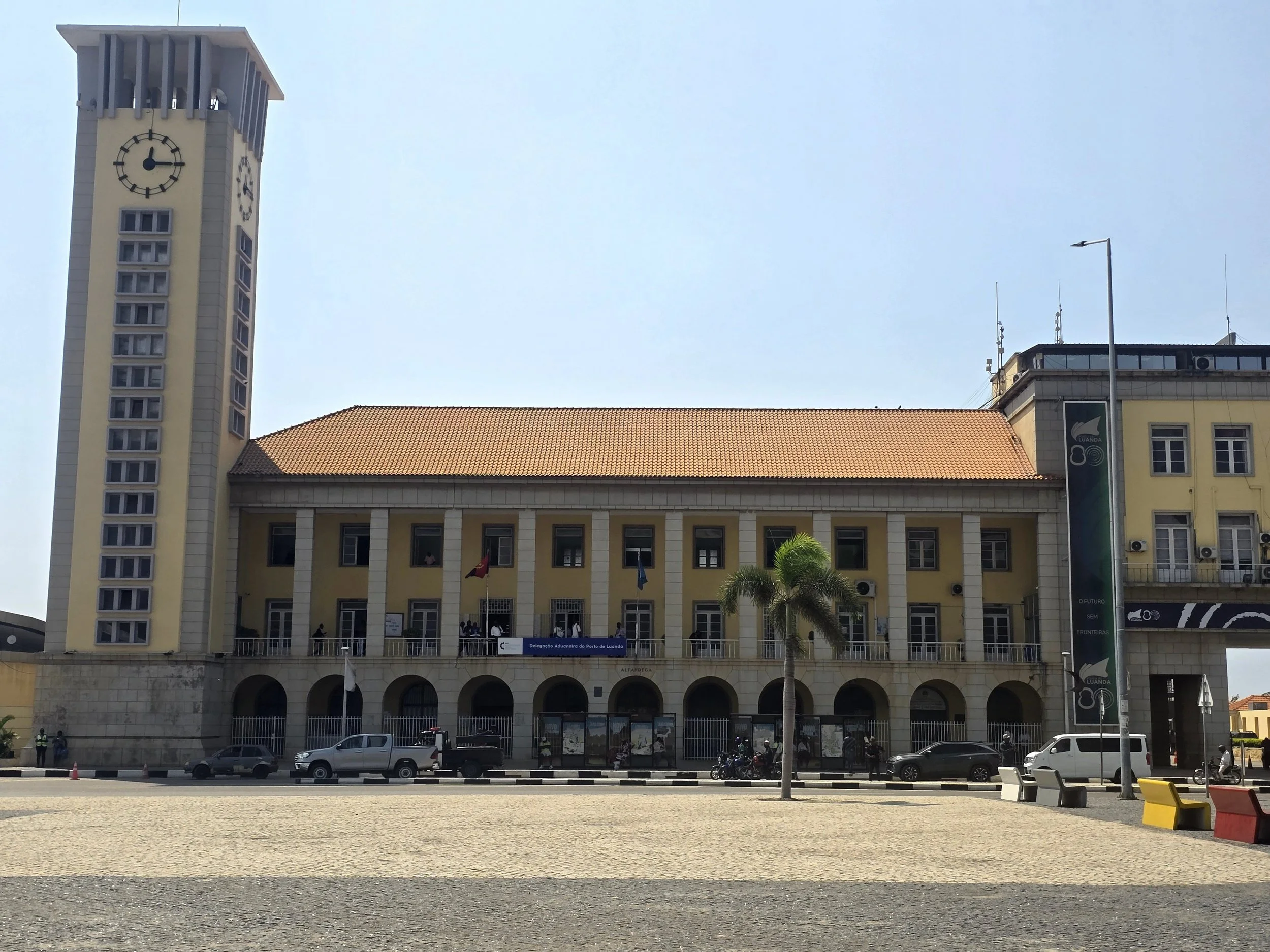
luanda customs
Unlike most other African countries, Angola doesn’t use the Carnet de Passage system. Instead, Bob had been issued with a 30-day Temporary Import Permit at the border, extendable once from within the country for a further 30 days. That was the absolute limit.
The next two days were spent making regular pilgrimages to Luanda’s customs headquarters in the hope that somebody, somewhere, might possess both authority and imagination.
Eventually we found ourselves seated opposite three senior customs officials. Much discussion followed. Phones were consulted. Heads were scratched. Various documents were examined with great seriousness. After what felt like an encouraging amount of deliberation, a solution finally emerged.
Once back in the UK and just prior to our TIP expiring, we were to telephone the customs office in Luanda. They would then generate a unique twenty-digit code. We would pass this code to Luis, who would use it to extend Bob’s permit by thirty days.
This solved precisely half of the problem. By our calculations, Bob would still overstay his welcome by at least a fortnight before we reached the Namibian border. Everyone other than us seemed perfectly content with this arrangement, Exactly how this would be viewed by the immigration officer at the Namibian border remains to be seen.
Eventually it was time to fly back to UK.
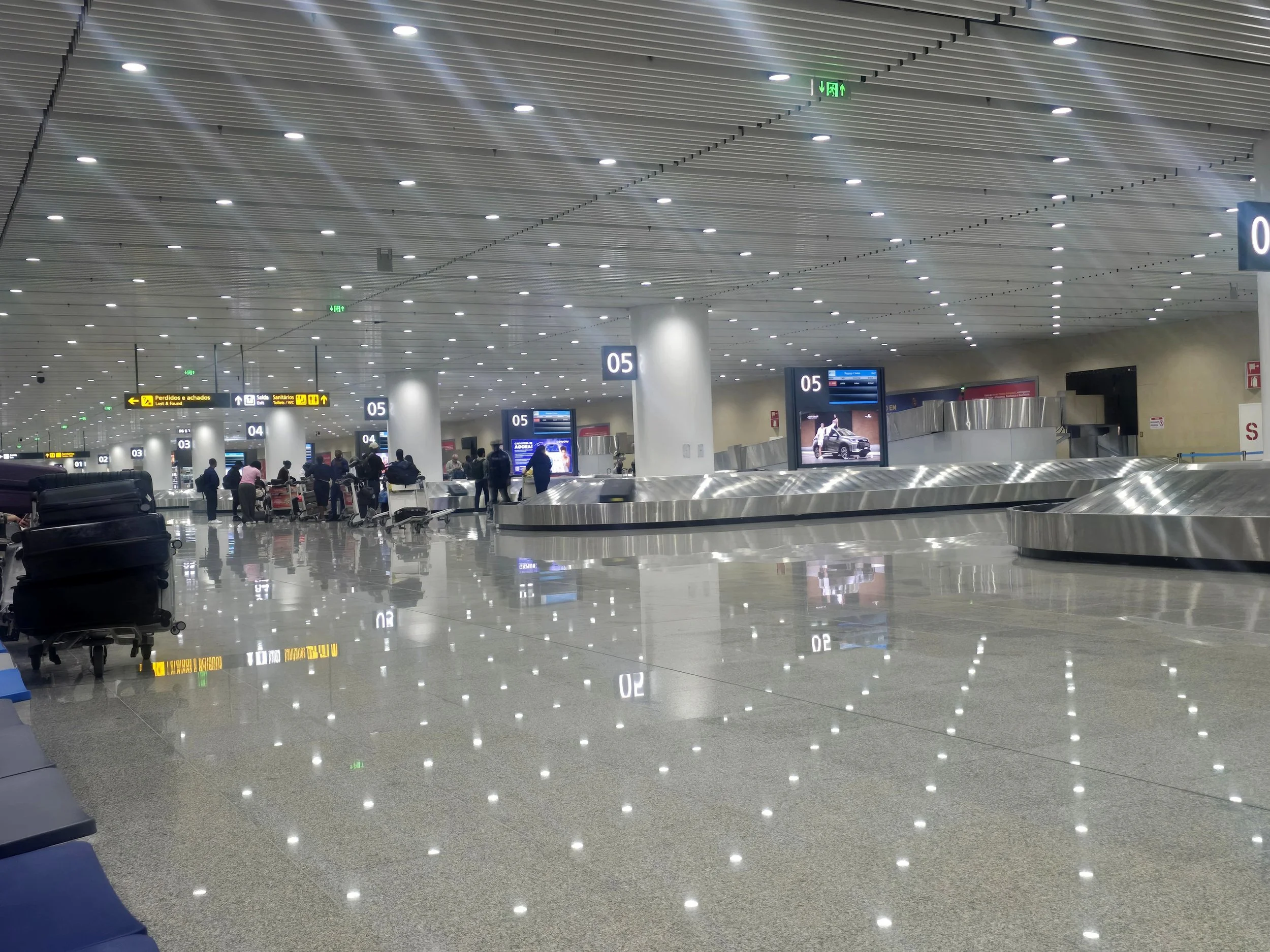
luanda new international airport
TAAG Airways was advertising brand—new Dreamliners, Airbus A220s and business-class fares at roughly half the price of everyone else. The economics alone should probably have raised questions.
Luanda’s new £2.4 billion airport looked magnificent. Vast, modern and almost completely empty, it felt like someone had built the future but nobody knew about it. The aircraft, however, appeared to have been built considerably earlier.
We had been forewarned that TAAG flights occasionally disappeared from the schedule at short notice or were commandeered by government delegations, so merely leaving, let alone on time, counted as success. Expectations rose briefly. They fell again almost immediately.
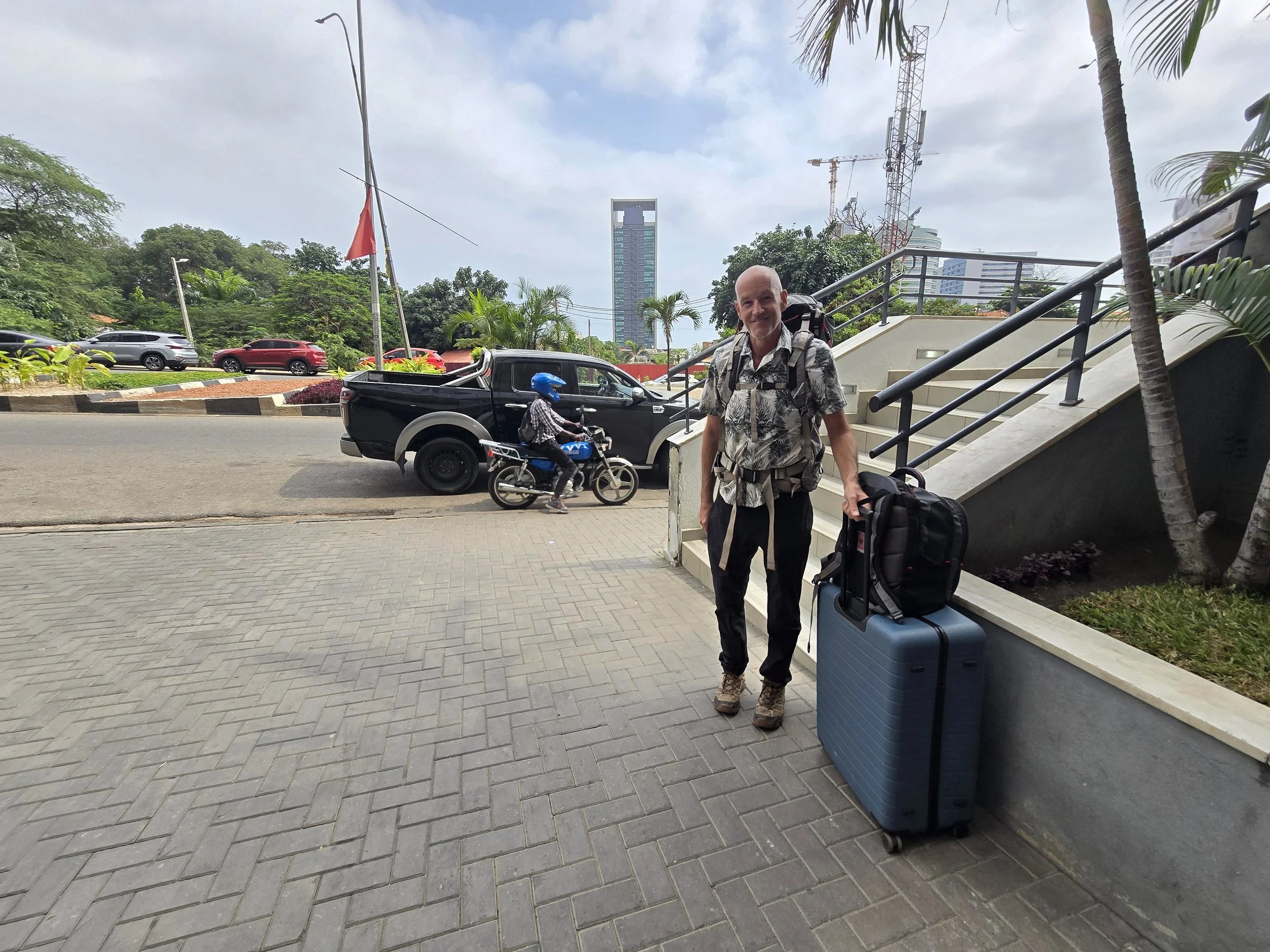
off to uk
The entertainment system had evidently retired some years previously. None of the other passengers even attempted to switch theirs on, suggesting this wasn’t a temporary fault but an accepted feature of the airline. The drinks service eventually materialised, although only briefly. After the initial half glass of wine, securing a refill required the patience and timing normally associated with spotting elusive wildlife. The cabin crew displayed an extraordinary ability to avoid eye contact, making each top-up feel like a successful ambush.
Still, the tickets had been cheap and taking into account the enormous luggage allowance, we considered ourselves marginally ahead.
To be continued ……